UAP
Roswell Then and Now: How a One-Day Story Went Full Circle
By Darrell Wallen
Would you prefer to listen?
Roswell began in July 1947 as an Army press release and was retracted within a day. The documented record since shows a classified balloon program, an admitted cover story and destroyed base records, but no verified debris or bodies. Polls show Americans more convinced than in earlier readings that the government is withholding information, though not more convinced that the answer is aliens.
On the afternoon of July 8, 1947, a small-town Army airfield in New Mexico told the world it had captured a flying saucer. Not a rumor. Not a tip from a farmer. A press release, from the military itself, which, according to the NICAP timeline, was in the hands of both Roswell radio stations and both daily newspapers by noon. Within hours, the story was on the wire services, and the sheriff's phone lines were jammed, with three calls coming in from England, one of them from the London Daily Mail.
By that same evening, a general in Fort Worth, Texas, had stood in front of reporters with a pile of tinfoil and sticks and told everybody to relax, it was a weather balloon.
That should have been the end of it. And for about thirty years, more or less, it was. Then the story came back. It came back with witnesses, books, a museum, a festival, a Congressional investigation, two Air Force reports, a hoaxed film seen around the world, and, in 2024, a section in an official Pentagon history. And today, nearly eighty years later, Americans tell pollsters, by large margins, that they think their government knows more than it says.
This article follows that arc: the first day, the long quiet, the revival, the hoaxes and retractions, the government's answers, and where things stand now. It separates what is documented from what is claimed, and what is claimed from what is simply unknown. Some of what follows will not please believers, and some will not please skeptics.
§ 1Day one: what actually happened
The facts that nobody seriously disputes come first, and there are more of them than many people expect.
A rancher named William Brazel, everybody called him Mac, was managing a ranch northwest of Roswell. On June 14, 1947, he and his young son came across a large area of wreckage. He told the Roswell Daily Record that it was made up of rubber strips, tinfoil, a tough kind of paper, and sticks. He was in a hurry that day and didn't think much of it. On July 4 he went back with his wife and two of his kids and gathered up a bundle of the stuff. A few days later, he heard people talking about flying discs, and the following Monday, July 7, he drove into Roswell and, in his words, "whispered kinda confidential like" to Sheriff George Wilcox that he might have found one.
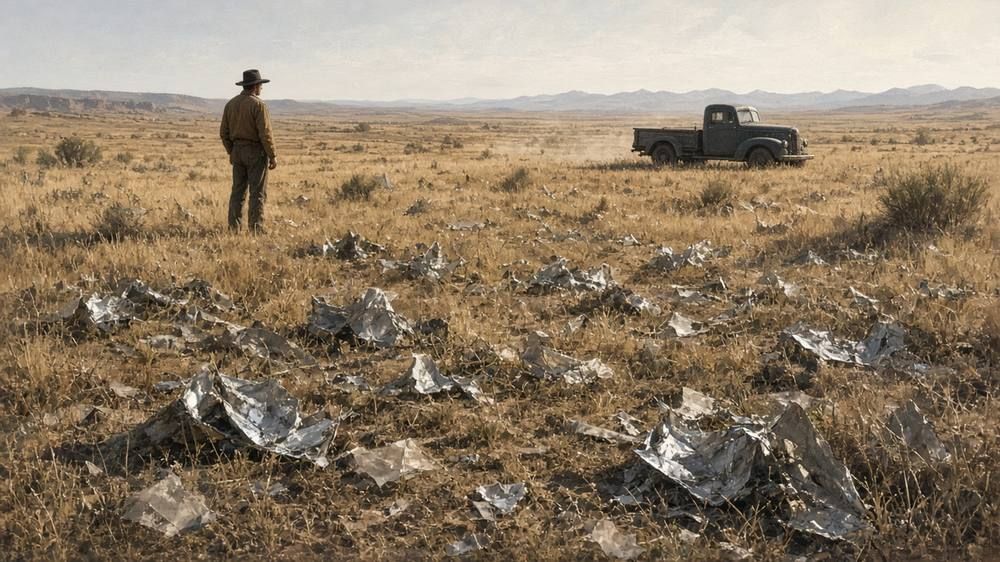
The sheriff called Roswell Army Air Field, home of the 509th Bomb Group, the Army's atomic bomb unit. The intelligence officer, Major Jesse Marcel, and a man in plain clothes went out to the ranch, collected the debris, and took it back.
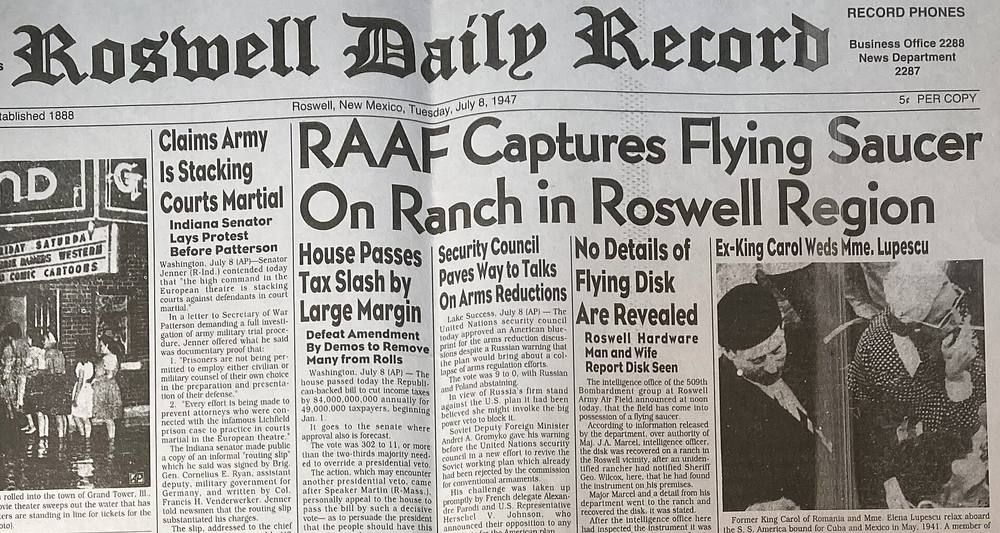
The next day, July 8, the base public information officer, Lieutenant Walter Haut, wrote a press release at the order of the base command. The Roswell Daily Record that afternoon ran the headline: "RAAF Captures Flying Saucer On Ranch in Roswell Region." The paper said the intelligence office of the 509th had announced at noon that the field had come into possession of a flying saucer. The Associated Press had it on the wire a little after two in the afternoon, according to the timeline kept by NICAP, a pro-UFO research group. The story went around the world.

Remember the context. This was only a couple of weeks into the first big flying saucer wave in American history. The AP said saucer reports had puzzled and worried residents of forty-three states in the previous weeks. Everybody was primed. And here was the Army itself saying it had one.
Then came the correction, and it came fast. Debris from the ranch was flown to Fort Worth, to the headquarters of the Eighth Air Force. Brigadier General Roger Ramey, the commander, met the press. A Star-Telegram reporter named J. Bond Johnson was sent out by his editor to photograph the saucer. What he photographed was Ramey, and Colonel Thomas DuBose, and later Major Marcel, with debris on the floor. A weather officer, Warrant Officer Irving Newton, was brought in and identified it as a radar target, the kind of balloon-lifted reflector used to track winds. The Roswell Daily Record's headline the next day: "Gen. Ramey Empties Roswell Saucer."
An FBI teletype from that same day, the authenticity of which the FBI later confirmed to investigators, says the military described the object as resembling a high-altitude weather balloon with a radar reflector. We know about that teletype because the Government Accountability Office dug it up in the nineties.
One part of the record often gets lost. Mac Brazel was interviewed the night of July 8 by the Daily Record and by the Associated Press reporter Jason Kellahin. Brazel said he had found weather balloons on his ranch twice before, and that this was different. His words: "I am sure that what I found was not any weather observation balloon." But he also said he was sorry he ever said anything, and that if he found anything else short of a bomb, they would have a hard time getting him to talk.
§ 2Did the public shrug?
The usual shorthand is that the public heard the Army's claim, heard the correction, and moved on. The record shows that is both right and a little wrong.
It is wrong in one sense: on day one, the public did not shrug. It was a front-page, worldwide, jaw-dropping story. The Army said it had a flying disc. People noticed.

It is right in another: it was a one-day story. A collector who runs a pro-crash website and surveyed more than four hundred newspapers from the time found that Brazel's second-day interview made hardly a dent outside of New Mexico. The correction ran, the saucer wave rolled on, and within days there were other sensations. A write-up of Roswell's history from Fairleigh Dickinson University's polling group put it plainly: the incident was largely forgotten, at least in mainstream discussion of UFOs, until the late 1970s.
The accurate summary is not that nobody cared. Everybody cared for about a day, and then a very convincing, very official correction, with pictures and a named general, drowned it out.
§ 3The secret that made the weather balloon story a problem
The later trouble comes from here, and it is the hinge of the whole story.
That weather balloon explanation was not the complete truth. The Air Force itself says so, in its own reports. According to the 1995 Air Force report, Colonel DuBose, who was Ramey's chief of staff, later said that officials at Eighth Air Force were told to say the material was a weather balloon target, and that the weather balloon explanation was a cover story to divert the attention of the press. The 1995 report also says that when its researchers looked for any documentation of why the base announced a "flying disc" in the first place, they failed to locate any documented evidence for it.
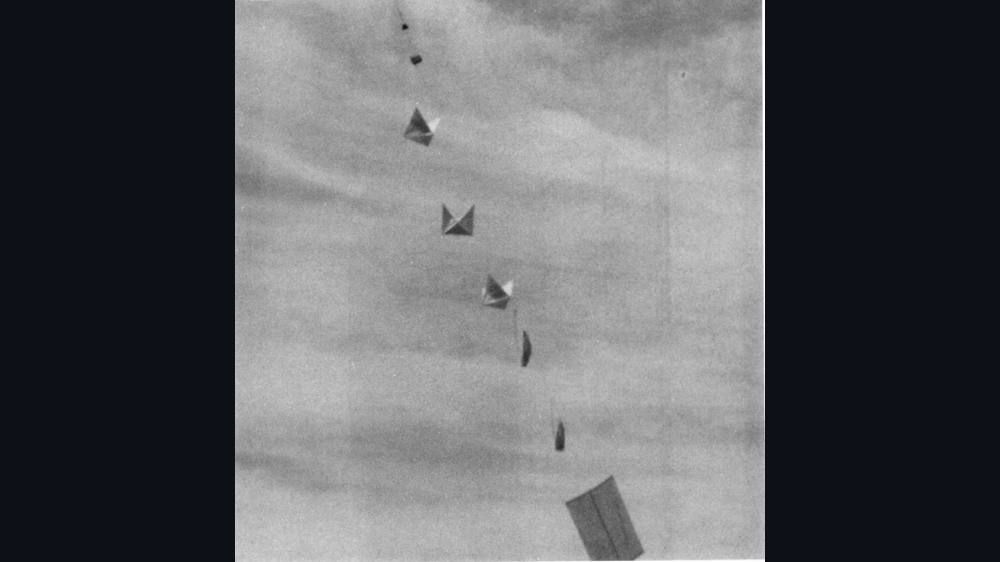
And what the Air Force says the debris actually was, is a classified balloon project called Project Mogul. Mogul was a top-secret Army Air Forces program, run through New York University researchers, flying long trains of balloons with microphones to listen for Soviet atomic bomb tests from high in the atmosphere. In 1994 and 1995, Air Force researchers Colonel Richard Weaver and First Lieutenant James McAndrew concluded that the debris was most probably from a Mogul balloon train, flight number four, launched June 4, 1947, from Alamogordo. Evidence they cited included the personal journal of the project scientist Albert Crary, supplied by his widow, statements from Charles Moore, the New York University engineer on the project, from Albert Trakowski, who was a captain in the project in 1947, and from Sheridan Cavitt, the counterintelligence officer who went out to the ranch, who described sticks and reflective material that looked consistent with a weather balloon. The report says it is very probable. It does not say proven.

In 1947, the military was hiding a real secret, a classified balloon program, and it told a partial truth to protect it. Whatever happened at Roswell, there was a cover story. The question the next sixty years fought over is how deep it went.
§ 4The thirty-year quiet, and the revival
The story then sat there. In 1978, a nuclear physicist and UFO lecturer named Stanton Friedman tracked down Jesse Marcel, by then retired, and Marcel told him it had not been a weather balloon. He told Friedman that it was something not of this earth. The National Enquirer ran the story, the television series In Search Of aired it in 1980, and the first book on Roswell, The Roswell Incident, by William Moore and Charles Berlitz, came out in 1980.
Kevin Randle and Donald Schmitt followed with UFO Crash at Roswell in 1991. Friedman and Don Berliner published Crash at Corona in 1992. Witnesses, most of them people who had been silent for forty years or more, stepped forward in a wave. Glenn Dennis, a funeral director, told Friedman in an interview on August 5, 1989, that a nurse had described alien autopsies at the base hospital. Frank Kaufmann, Jim Ragsdale, Gerald Anderson, and others followed. In 1991, Walter Haut, the man who wrote the press release in 1947, helped found the International UFO Museum in Roswell. It opened in 1992.
From that point, Roswell was no longer a footnote. It was a brand.
§ 5What happened to the witnesses
The witness record is where the honest account becomes uncomfortable for believers, and it deserves to be laid out plainly.
Jesse Marcel's story grew between 1947 and 1978. A researcher named Robert Todd, and separately Kal Korff, writing in Skeptical Inquirer in 1997, examined Marcel's service file, and both reported that it did not support some of the credentials Marcel claimed, such as being a pilot who had shot down enemy aircraft. Marcel's son, Jesse Marcel Junior, later spoke of strange hieroglyphics on pieces of debris, and the Air Force's 1995 report says some of the Mogul reflector targets were assembled with purplish-pink tape printed with symbols, and includes a drawing of that tape by Mogul engineer Charles Moore.
Glenn Dennis gave investigators a name for the nurse, Naomi Maria Selff. The Air Force's 1997 report says its researchers searched the hospital's morning reports and the personnel records center in St. Louis and found nobody by that name, or anything close, who ever served at Roswell, and that researchers on the believing side had not been able to find her either. The same report says the hospital's five nurses that July included none who was transferred overseas or killed in a crash. Some accounts say Dennis later told investigators the name was not the nurse's real one, but that detail appears only in secondary summaries, so it is treated here as unverified. Karl Pflock, a former CIA officer and Pentagon official who became one of the serious skeptical Roswell researchers, gave Dennis's account a chapter of its own in his 2001 book.
Frank Kaufmann was a leading source in the nineties, and he told Randle and Schmitt he had been in military intelligence and had watched the object on radar. Then, after Kaufmann died in 2001, Randle and the Center for UFO Studies' Mark Rodeghier went through his papers and wrote, in the center's own journal in 2002, that his real discharge record showed a clerk-typist and personnel specialist, that the copy he had shown investigators was an altered version of it, and that he had produced documents that did not hold up. Randle also noted that nobody could confirm any radar capability at Roswell in July 1947. Rodeghier's conclusion was that no one can have confidence in any detail of Kaufmann's testimony. Jim Ragsdale is the one the Air Force singled out: its 1997 report says that in two separate sworn statements he described two different sites, many miles apart.
Gerald Anderson claimed to have seen a crash site as a child. A dating test on the ink of his uncle's diary came back later than the date it was supposed to be written. In January 1993, Friedman and Berliner wrote a note in the MUFON journal saying they no longer had confidence in his testimony and that he had admitted falsifying a document. Friedman later distanced himself from that note, so that point is disputed.
Then there is Walter Haut himself. In 1979, he told interviewers he was not a witness to any debris, and that when he asked to see the object, he was told that was impossible. In 1993 he signed an affidavit saying more. And in December 2002, he signed what is called a sealed affidavit, which was released after he died in 2005, and published in 2007 in the book Witness to Roswell. It said much more. Don Schmitt has said himself that he drafted it, working from his conversations with Haut, and that Haut reviewed the draft and signed it. Critics noted it conflicted with Haut's earlier statements. None of this shows that Haut lied. It does mean the 2002 document is not the same thing as a man's own account over a lifetime.
And Kevin Randle, who co-wrote the book that launched the modern witness wave, wrote on his blog in 2019, "the evidence in the Roswell case is not as strong as I once believed but I have found no terrestrial explanation that covers all the facts." That sentence is one of the most candid summaries of the field. One of the case's chief investigators says the evidence is weaker than he thought. He also says nothing he has seen fully explains it.
§ 6The hoaxes
If the witness problems were the slow leak, the hoaxes were the blowouts.
In August 1995, the Fox network aired a black-and-white film, produced by a British entrepreneur named Ray Santilli, supposedly showing an autopsy on a Roswell alien. Fox aired it on August 28, 1995, and it was shown around the world. In 2006, in a Sky television documentary, Santilli and his partner Gary Shoefield said that what the world had seen was a reconstruction, not the original film. Their story was that the real footage had mostly oxidized, so they rebuilt it from Santilli's memory and a few surviving frames, using a sculptor named John Humphreys, who has said he made the body. The supposed cameraman's interview was also staged. Nobody has produced the original footage.
Then in 2015, in Mexico City, at an event promoted by Jaime Maussan, a set of old photographic slides were shown that supposedly depicted a tiny alien body from Roswell. They were identified later, and the Guardian reported it in 2017, as photographs of a mummified two-year-old boy once displayed in the Chapin Mesa museum at Mesa Verde, Colorado. A child. A real child, who deserves better than to have been turned into a stage prop.
And there was Colonel Philip Corso. He wrote The Day After Roswell in 1997, with a co-writer named William Birnes, claiming that in the early sixties, working in Army research and development, he had been put in charge of recovered alien technology and had seeded it into American industry. He is usually called Colonel, but Philip Klass's newsletter says he retired from the Army in 1963 as a lieutenant colonel. Senator Strom Thurmond's foreword to the book was withdrawn, with Thurmond saying in a 1997 statement, "I know of no such 'cover-up' and do not believe one existed." Klass catalogued factual errors in the book in his Skeptics UFO Newsletter, and Randle and Pflock were critical of it too. The Guardian put the book on a list of top ten literary hoaxes. Anyone offering Corso as proof should know what the record says.
The hoaxes matter because they are one reason the serious conversation stalled. They gave every skeptic an easy reason to wave the whole subject away.
§ 7The government answers
Meanwhile, the government began to answer. How it did so became part of the controversy.
In 1993, Congressman Steven Schiff of New Mexico, a Republican, who also served in the New Mexico Air National Guard, started asking the Pentagon about Roswell. His request listed specific claims from witnesses: Lydia Sleppy's story of a teletype message saying "cease transmission, national security item," a radio manager's claim that his station was threatened, DuBose's cover story statement, a pilot's alleged sighting of bodies relayed by his family, and Glenn Dennis's story. He asked what the government's position was.
He also asked the General Accounting Office, now the Government Accountability Office, to find out what records existed. The National Archives says that audit began in February 1994. The report, number NSIAD-95-187, came out on July 28, 1995.
Here is what it said. Army regulations in 1947 required air accident reports to be kept permanently. Four air accidents were reported in New Mexico that July, and all occurred after July 8. There was no requirement to file a report on a weather balloon. And then the part that fuels suspicion: Roswell Army Air Field's administrative records from March 1945 through December 1949, and its outgoing messages from October 1946 through December 1949, had been destroyed. The GAO could not find out when, or under what authority. The National Personnel Records Center's chief archivist said many Air Force organizational records from that period were destroyed without any record of the authority. So the destruction is real, and so is the ordinary-sounding explanation, and the GAO did not rule between them. It found only two government records from 1947, the base history and the FBI teletype, and it did not decide what the object was.
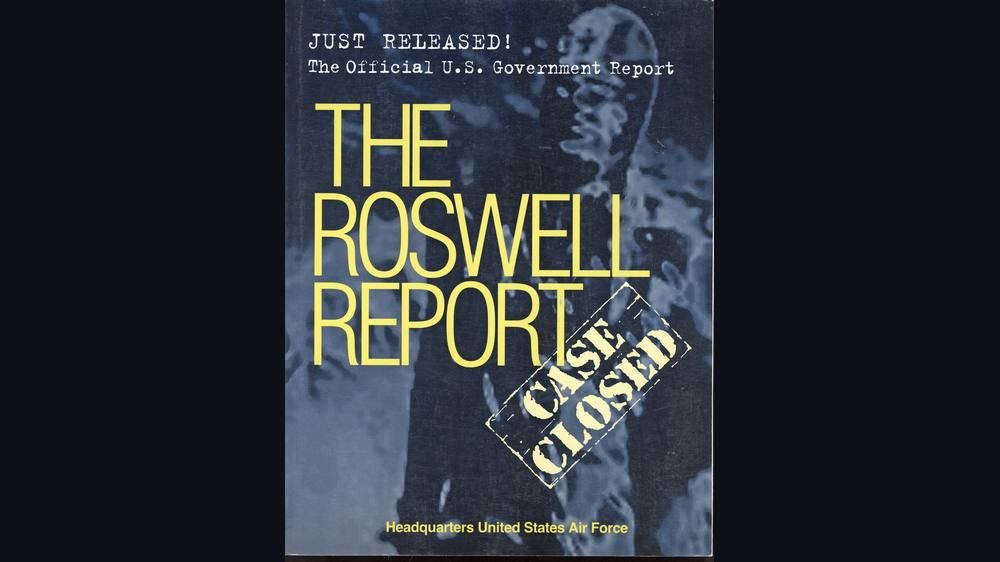
In September 1994, the Secretary of the Air Force announced that the Air Force had completed its records search, and in 1995, the report cited above, The Roswell Report: Fact versus Fiction in the New Mexico Desert, concluded that the material was consistent with a Mogul balloon and found no evidence of a cover-up or an extraterrestrial recovery. In June 1997 came a second report, Case Closed, which argued that the stories of alien bodies were memories of anthropomorphic test dummies dropped from high-altitude balloons in the fifties, in tests like Project High Dive, and the hospital stories were a mix-up of a 1956 aircraft accident that killed eleven Air Force members and a 1959 manned balloon mishap.

Both sides have a case.
The Air Force case has real strengths. Mogul fits the physical descriptions. It fits the tape symbols. The documents Crary's widow provided show the flight. And the Air Force found no document anywhere that says an alien craft was recovered.
But it has real weaknesses too. The dummy explanation uses tests from the 1950s to explain accounts about 1947. That only works if witnesses merged memories across years. The Air Force itself concluded that the number of body accounts suggested an explanation other than dishonesty, which is a generous reading, but it is still a stretch to some. The balloon link is "very probable," not proven. The records are still partly gone. And the Air Force's own earlier account in 1947, the weather balloon, was admittedly a cover story. It is hard to ask people to trust the next explanation after that.
The 1995 and 1997 reports did not settle the argument. In a sense, they were the opening of the modern one.
§ 8The Pentagon's 2024 history
Fast forward to March 2024. The Pentagon's All-domain Anomaly Resolution Office, AARO, released a report on the historical record of government involvement with UFOs. It is called Volume One.
Contrary to what is sometimes said, there is no standalone AARO report on Roswell. What exists is a section in Volume One titled "Roswell Investigations and Inquiries, 1992 to 2001," and a section on Project Mogul that says a crashed Mogul balloon near Roswell is assessed to be the source of early UFO claims. The Roswell section summarizes the Clinton-era inquiry, Schiff's questions, the GAO report, the 1995 Air Force report, and the 1997 one. It restates their conclusions: no UFO event, no cover-up, Mogul balloon, dummies. It does not bring forward new witnesses or documents. And it contains a small slip: its footnotes date Case Closed to 1994 and 1995, when it was published in June 1997.
It also quotes President Bill Clinton. According to press reports AARO cites, Clinton had asked his national security adviser Sandy Berger to find out whether the government held aliens or alien technology. Clinton said, in the words the report quotes, "As far as I know, an alien spacecraft did not crash in Roswell, New Mexico, in 1947... if the USAF did recover alien bodies, they didn't tell me about it... and I want to know."
AARO's first director, Sean Kirkpatrick, left that job in December 2023, a few months before the report came out. But in an interview in March 2024 with CNN's Peter Bergen, he described how he sees Roswell: Mogul balloons, dummy recovery operations, and a nearby military plane crash with eleven fatalities, which, in the Air Force and AARO account, later merged in people's memories. He said that true believers are not just outside of government, that many of them are inside government, and he named the late Senator Harry Reid. He said it is, quote, "a religious belief that transcends critical thinking."
Whether that is a fair observation or an insult depends on where one stands. It is worth noting that this was the former head of the government's own UAP office, speaking in public, in the same month that his old office published a history with a Roswell section.
§ 9Congress and Roswell
When Congress held public hearings on UAP, Roswell was not front and center, which surprises some people.
At the July 26, 2023, House Oversight subcommittee hearing, Congresswoman Anna Paulina Luna, who was a guest at that hearing, mentioned, quote, "from Roswell, New Mexico to the coast of Jacksonville, Florida" in her opening. And Congresswoman Nancy Mace said that since the Roswell incident in 1947, many Americans have wondered about the dangers of unknown objects crisscrossing our skies. Those were passing references.
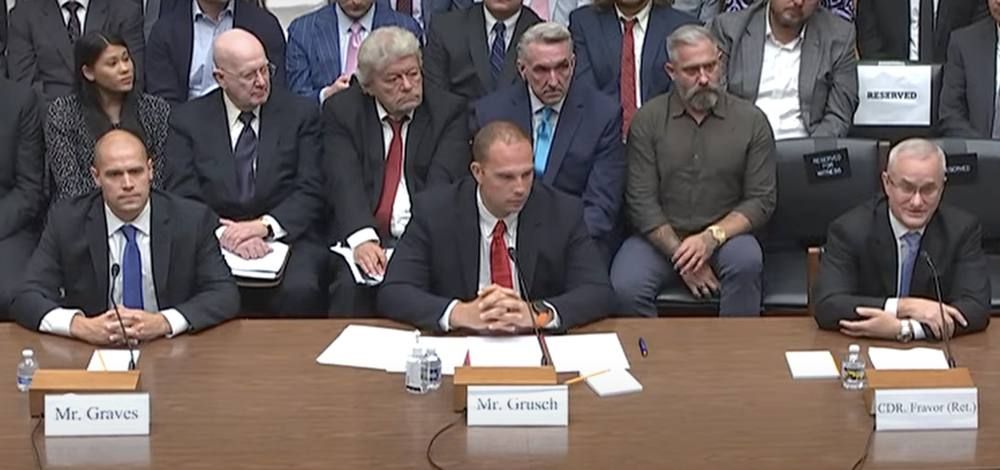

David Grusch, the former intelligence officer, testified under oath that he was informed in the course of his official duties of a, quote, "multi-decade UAP crash retrieval and reverse engineering program," and that he had personally interviewed people with direct knowledge. A search of the transcript finds no mention of Roswell by Grusch. What he described was a claim about crash retrievals that he said came from people he interviewed. That is testimony about testimony, and not evidence the public can inspect.
On September 9, 2025, at a hearing of the Task Force on the Declassification of Federal Secrets, chaired by Luna, Congressman Tim Burchett, in conversation with the journalist George Knapp, said it had, quote, "gone through so many... since Roswell, for instance," and worried that people looking at it do not even know what they are looking at.
That is the sum of it. Roswell is part of the language of the debate. It is a reference point, not a case being argued. That is itself informative. Even the lawmakers most committed to this topic are not building their arguments on Roswell. They are building them on newer claims.
Senator Harry Reid directed defense funding for the AAWSAP and AATIP programs, about twenty-two million dollars, according to AARO. That program was about advanced aerospace threats, not Roswell. Reid's name comes up often in these conversations, so it is worth keeping the stories separate.
§ 10What do Americans actually think?
Polling tells a more complicated story than a popular line suggests.
In 1947, Gallup asked Americans about flying saucers. About ninety percent had heard of them. Asked what they were, a third had no answer. Twenty-nine percent said imagination, ten percent said a hoax, fifteen percent said a United States secret weapon, three percent said weather devices, and one percent said a Russian weapon. Visitors from space were not even a named category. That was the starting point.
In 1996, Gallup found seventy-one percent of Americans believed the government knew more about UFOs than it was telling. In June 1997, a Time and CNN poll found eighty percent thought the government was hiding knowledge about extraterrestrials, and almost two thirds said they believed a UFO crashed at Roswell. A Gallup poll that year found thirty-one percent believed a spacecraft from another planet crashed at Roswell, and when asked about the Air Force's dummy explanation, only twenty-five percent believed it, and sixty-four percent did not.
Then Gallup in 2019 found thirty-three percent said some UFOs were alien spacecraft. In 2021, forty-one percent. Also in 2021, Pew, in a survey of more than ten thousand adults, found sixty-five percent saying intelligent life exists on other planets, and fifty-one percent saying military-reported UFOs are probably or definitely evidence of intelligent life outside Earth. It was not Pew 2023, as is sometimes claimed. It was June 2021.
In 2022, Fairleigh Dickinson University asked specifically about Roswell, and thirty-four percent said it was somewhat or very likely that extraterrestrials crash-landed there in 1947, twelve percent very likely, and twenty-eight percent not at all likely. Democrats and Republicans were nearly the same, thirty-four and thirty-one percent.
In November 2025, a YouGov poll found fifty-six percent said aliens definitely or probably exist, forty-seven percent said aliens have visited Earth, and seventy-three percent said the government would hide UFO evidence.
And then the one that matters most, because it is the latest. Gallup, July 2026, published August 26. Thirty-seven percent said some UFOs have been alien spacecraft. Forty-nine percent said all sightings can be explained by human activity or natural phenomena. Thirteen percent had no opinion. Seventy-eight percent said the government knows more than it tells the public. Seventeen percent said they themselves had seen something they thought was a UFO.
The numbers need careful reading. A common claim is that more Americans believe in aliens than ever before. The data does not say that. Belief that some UFOs are alien spacecraft went from thirty-three percent in 2019 to forty-one percent in 2021, and then down to thirty-seven percent in 2026. It did not keep climbing. The share who are unsure has grown, from seven percent to thirteen.
What has grown, and grown steadily, is the belief that the government is withholding information. Seventy-one percent in 1996, sixty-eight in 2019, seventy-eight in 2026. That is higher than either earlier Gallup reading. The accurate summary of the present is not that Americans are surer about aliens. It is that they are more sure the government is not telling them everything. Those are different things, and the second one has more evidence behind it than the first.
§ 11The town
Roswell the town is part of the story. The International UFO Museum and Research Center, founded by Walter Haut and others in 1991, opened in 1992. An Associated Press story in December 2023 reported that it draws more than two hundred twenty thousand visitors a year, and had just welcomed its five-millionth visitor, a local father and daughter, on November 21, 2023. The UFO festival has run since 1996. The City of Roswell's own report on the 2022 festival, the seventy-fifth anniversary, said it brought more than forty thousand visitors and a direct economic impact of two point one nine million dollars.
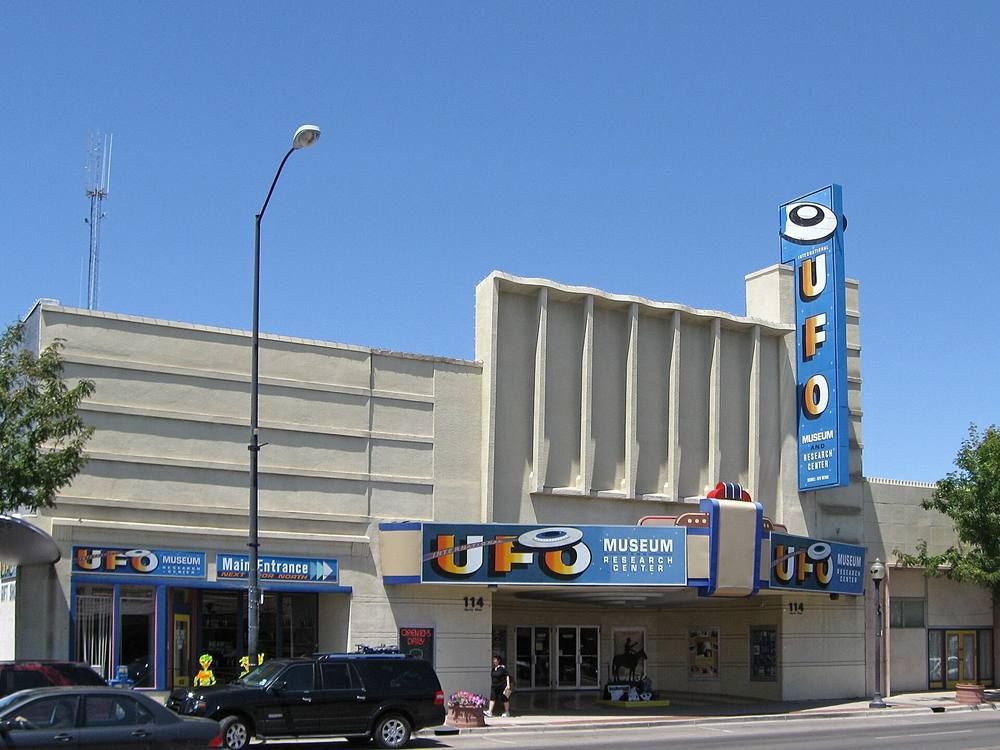

The city's own page describes the 1947 event as crash debris "confirmed in a government release to be from a flying saucer, then reclassified as a weather balloon." The town knows exactly what it is celebrating. Skeptics such as Kal Korff, writing in Skeptical Inquirer in 1997, have said the Roswell myth has been very good business for UFO groups, publishers, Hollywood, the town, and the media. That may be a harsh way to say it, but it points at something real: there is an economy here, and it runs on curiosity, not on new evidence. That does not make the crash false. It is a reason to keep the festival and the forensics in separate boxes.
§ 12Where things stand
The record sorts into three groups.
Documented. A rancher found debris in June 1947. The Army's own base announced a flying disc on July 8, then retracted it within a day. The military later admitted the weather balloon account was a cover story. Records from the base, including its outgoing messages, were destroyed with no recorded authority. The Air Force, in 1995, said the best match is Project Mogul flight four, using a scientist's journal and witness statements. GAO found two 1947 records and no accident report. AARO's 2024 history restates the Mogul conclusion.
Claimed. That an alien craft and bodies were recovered, that the military covered it up, that Marcel's later account was true, that Dennis, Kaufmann, Anderson, and the sealed Haut affidavit describe real events, that Corso moved recovered technology into industry. The claims are many. Many have been retracted, contradicted, or shown to be hoaxes. A few have never been fully answered.
Unknown. What exactly the debris was, beyond "very probably Mogul." How and why the base made the announcement that it did. Who destroyed those records and when. And how much of what witnesses said in the nineties reflected real memory, and how much was contamination from books and television that had been circulating for a decade.
§ 13The full circle
In 1947, the military published it. Not leaked, published. A press release. The public heard it, heard the correction, and the story vanished. Not because nobody cared, but because a convincing official explanation arrived in hours and the news cycle moved on. The shrug was a day long, and it lasted thirty years.
Then came the cover-up decades. A real classified project explained the debris, but nobody could say so. The first explanation was a cover story, and later official explanations arrived forty and fifty years late. The witnesses came forward in a wave, and many of them were sincere and many of them were unreliable. The hoaxes poured in. The government investigated itself, with Schiff and the GAO pushing, and the answers were partial: some records existed, some had been destroyed, the Air Force said Mogul and dummies and no cover-up, and a huge share of the public said they did not believe it.
Today there is a different kind of openness. A Pentagon office with a published history that has a Roswell section. A former director who will say publicly what he thinks of the true believers. Congress holding hearings where Roswell is a reference point instead of a taboo. And a public that, by Gallup's July 2026 numbers, is more convinced than in Gallup's 1996 and 2019 readings that the government knows more than it says, though not more convinced that the answer is aliens.
The full circle, then, is this. In 1947 the government spoke, and the public did not push. In the decades after, the public pushed, and the government answered carelessly or not at all. Now, both sides are talking, in public, in front of cameras, with documents. That is a real change. But it is a change in openness, not a change in evidence. There is no debris on a lab bench. There are no verified bodies. There is a stack of reports, a stack of retractions, and a missing set of records.
§ 14What a real investigation would look like
Settling Roswell, rather than arguing about it, would take five things.
First, find the original debris. Not photographs. The actual material that Marcel and Cavitt gathered, if it still exists in any archive, and test it with modern methods. If it is a Mogul balloon train, the rubber, the foil, the tape, and the sticks will be consistent with the manufacturers. If it is something else, that will be known.
Second, release or reconstruct the Mogul launch and tracking records. NYU flight four, the day it launched, where it was tracked, where it was last heard from. Everything that connects it to the ranch where Brazel found the debris. Right now the link is described as very probable. It should be a matter of record.
Third, account for the destroyed base records. Who ordered the disposal, under what authority, and what else went with it. The GAO asked. The answer was that nobody could say.
Fourth, put the witness material under the same rules as everything else. Statements taken in 1947 count for more than statements taken in 1990. Original recordings, not summaries. Independent corroboration, not repetition between books. And a requirement that any claim of a retrieval come with a named person, a date, and a document that someone outside the believing community can check.
Fifth, if anyone in government or industry holds evidence, from Roswell or anywhere else, make it available to a body with subpoena power and the authority to compel answers under oath, with whistleblower protection that actually holds.
None of that requires belief in aliens. None of it requires belief in a cover-up. It requires only that the best-known UFO story in the world be treated like any other unresolved question about what the government did in the past, with a request for the records.
That is the lesson of Roswell. The answer, in the end, may be a balloon. It may be something we have not yet imagined. But the way to get there is the same as it was in July of 1947: take what is documented, mark what is claimed, admit what is unknown, and keep asking.
Watch & Listen
Hear this entry read aloud. Coming soon — the channels are not live yet.
Sources
Articles, reference pages and papers
- Roswell Daily Record, July 8, 1947, "RAAF captures flying saucer on ranch in Roswell region" (transcription)
- Roswell Daily Record, July 9, 1947, "Gen. Ramey Empties Roswell Saucer" (transcription)
- Brazel interview, AP and newspaper survey (roswellproof.com, a pro-crash site; Internet Archive copy, as the live site is currently down)
- NICAP, July 8, 1947 press conference timeline (a pro-UFO research group)
- J. Bond Johnson interview, The UFO Chronicles
- Kevin Randle's blog, 2019 (Randle quote, Cavitt, Gerald Anderson)
- CUFOS/FUFOR, Plains of San Agustin report (Gerald Anderson)
- The Guardian, 30 September 2017, the Roswell slides identified
- CNN opinion by Peter Bergen, March 2024 (Kirkpatrick)
- CNN, March 8, 2024, Pentagon UFO detection kits
- DefenseScoop, Kirkpatrick's departure from AARO
- AP via Seattle Times, December 1, 2023, UFO Museum reaches 5 million visitors
- City of Roswell, UFO Festival Report 2022
- International UFO Museum
- Roswell UFO Festival
- CUFOS, International UFO Reporter, Fall 2002, Kevin D. Randle and Mark Rodeghier, "Frank Kaufmann Reconsidered" and "Frank Kaufmann Exposed"
- Don Schmitt, statement on the Haut affidavit (NICAP)
- Government Executive, June 4, 1997, "The Senator and the UFOs" (Thurmond statement on the Corso foreword)
- Philip J. Klass, Skeptics UFO Newsletter No. 49 (on Corso's The Day After Roswell)
- The Guardian, November 15, 2001, "Top 10 literary hoaxes"
- Kal K. Korff, "What Really Happened at Roswell," Skeptical Inquirer, July/August 1997 (Marcel's service file; the Korff comment on the Roswell economy was found through a search excerpt, not in the pages that could be read)
- Robert G. Todd on Jesse Marcel's service record, "Major Jesse Marcel: Folk Hero or...?" (listing at Weight of Evidence; the full text was not opened)
- The UFO Chronicles, April 2006, "Santilli Changes His Autopsy Film Story" (the Sky documentary)
- BBC Manchester, April 2006, John Humphreys on making the Roswell alien
- The UFO Chronicles, 2007, Stanton Friedman interview on how he found Jesse Marcel in 1978
- International UFO Museum, About Us (opened 1992)
- Grokipedia, Roswell incident (an AI-compiled encyclopedia, used as one source among many)
Also see (Wikipedia and Grokipedia; secondary sources, used for leads and cross-checking, and never the only support for a claim)
- Wikipedia – Roswell incident: en.wikipedia.org/wiki/Roswell_incident · Grokipedia: grokipedia.com/page/Roswell_incident
- Wikipedia – Project Mogul: en.wikipedia.org/wiki/Project_Mogul · Grokipedia: grokipedia.com/page/Project_Mogul
- Wikipedia – Jesse Marcel: en.wikipedia.org/wiki/Jesse_Marcel · Grokipedia: grokipedia.com/page/Jesse_Marcel
- Wikipedia – Walter Haut: en.wikipedia.org/wiki/Walter_Haut · Grokipedia: grokipedia.com/page/Walter_Haut
- Wikipedia – Roger M. Ramey
- Wikipedia – Glenn Dennis: en.wikipedia.org/wiki/Glenn_Dennis · Grokipedia: grokipedia.com/page/Glenn_Dennis
- Wikipedia – Stanton T. Friedman: en.wikipedia.org/wiki/Stanton_T._Friedman · Grokipedia: grokipedia.com/page/Stanton_T._Friedman
- Wikipedia – Kevin D. Randle
- Wikipedia – Karl T. Pflock
- Wikipedia – Philip J. Corso: en.wikipedia.org/wiki/Philip_J._Corso · Grokipedia: grokipedia.com/page/Philip_J._Corso
- Wikipedia – Philip J. Klass: en.wikipedia.org/wiki/Philip_J._Klass · Grokipedia: grokipedia.com/page/Philip_J._Klass
- Wikipedia – Steven Schiff: en.wikipedia.org/wiki/Steven_Schiff · Grokipedia: grokipedia.com/page/Steven_Schiff
- Wikipedia – Ray Santilli: en.wikipedia.org/wiki/Ray_Santilli · Grokipedia: grokipedia.com/page/Ray_Santilli
- Wikipedia – Charles Berlitz: en.wikipedia.org/wiki/Charles_Berlitz · Grokipedia: grokipedia.com/page/Charles_Berlitz
- Wikipedia – Alien Autopsy (1995 film): en.wikipedia.org/wiki/Alien_Autopsy_(1995_film) · Grokipedia: grokipedia.com/page/Alien_Autopsy_(1995_film)
Official documents
- GAO, NSIAD-95-187, Government Records: Results of a Search for Records Concerning the 1947 Crash Near Roswell, New Mexico, July 28, 1995
- U.S. Air Force, The Roswell Report: Fact vs. Fiction in the New Mexico Desert (1995)
- Same report, DTIC copy at the Internet Archive (full text)
- U.S. Air Force, The Roswell Report: Case Closed (1997)
- AARO, Report on the Historical Record of U.S. Government Involvement with UAP, Volume 1 (March 2024)
- Media engagement with acting AARO director Tim Phillips on Volume 1
- National Archives, Project Blue Book and the "Roswell Incident"
- FBI Vault, Roswell UFO
- House Oversight subcommittee hearing, July 26, 2023 (Serial 118-53)
- House Task Force on the Declassification of Federal Secrets hearing, September 9, 2025 (Serial 119-44)
Videos and broadcasts (read about; the originals were not viewed for this article)
- In Search of..., "UFO Coverups" (Season 5, episode 1, September 20, 1980), episode listing
- Alien Autopsy: Fact or Fiction? (Fox, August 28, 1995), as reported in the UFO Chronicles piece above
- The 2023 and 2025 hearings above were read from the official transcripts, not watched.
Books (cited through the pages above, not read cover to cover)
- Charles Berlitz and William Moore, The Roswell Incident (1980), as described by Friedman in the UFO Chronicles interview above
- Kevin Randle and Donald Schmitt, UFO Crash at Roswell (1991) and The Truth About the UFO Crash at Roswell (1994), as discussed in Randle's own 2002 IUR article above
- Stanton Friedman and Don Berliner, Crash at Corona (1992), as cited in the 1997 Air Force report
- Philip Corso with William Birnes, The Day After Roswell (1997), as reviewed in Klass's newsletter above
- Karl Pflock, Roswell: Inconvenient Facts and the Will to Believe (2001), through a published book summary
- Thomas Carey and Donald Schmitt, Witness to Roswell (2007), as described in Schmitt's statement above
Polls
- Gallup, August 1947, via Project 1947
- AEI summary of Gallup and other polls, including 1997 Roswell questions
- Time/CNN/Yankelovich, June 1997
- Gallup, July 2021
- Pew Research Center, June 2021
- Fairleigh Dickinson University PublicMind, June 8, 2022
- YouGov, November 2025
- Gallup, August 26, 2026, July 1-19 poll