SpaceX-Tesla
SpaceX Puts the Moon First as Starship Reaches Orbit and AI Becomes Its Biggest Business
By Darrell Wallen
Would you prefer to listen?
SpaceX began as a long shot to make life multiplanetary. In 2026 it is a public company, the dominant launch provider, and a major artificial intelligence business. Here is where its plans stand, what the evidence supports, and what critics say.
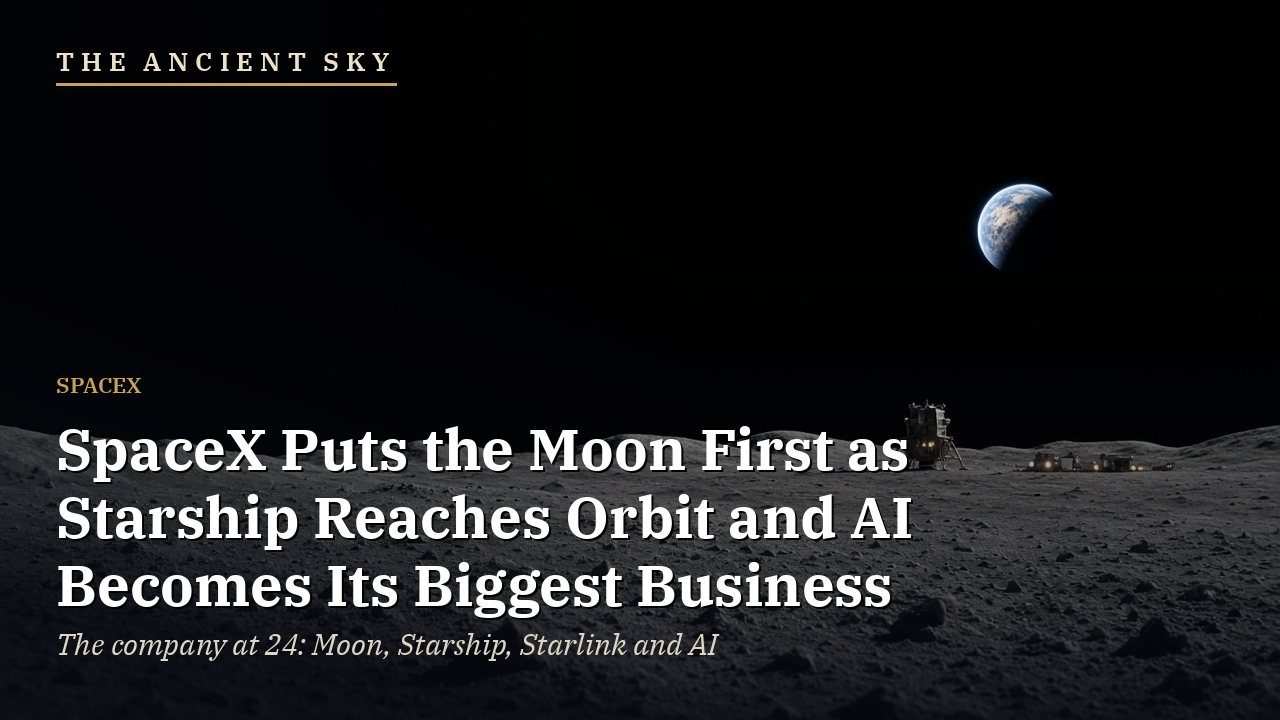
Twenty-four years after Elon Musk founded it, SpaceX is a public company worth roughly $2 trillion, the operator of the largest satellite network ever built, and the builder of Starship, the largest rocket ever flown. It has also changed course. In 2026 it moved its near-term focus from Mars to the Moon, merged with Musk's artificial intelligence company xAI, went public in the largest stock offering in history, and filed plans to put AI data centers in orbit.
The company now flies roughly half of the rockets launched to orbit worldwide and carries NASA's astronauts to the International Space Station. In the third quarter it reported $14.6 billion in revenue, most of which came not from rockets but from its AI business. Its stated goals, written into a filing with federal securities regulators, are among the most ambitious any company has put on paper. Many of them depend on technology that has not yet been demonstrated, and its valuation has drawn sharp criticism from analysts.
This is an overview of what SpaceX says it is trying to do, what it has done so far, how it makes money, where it came from, who is chasing it, and what critics and regulators have raised. Three companion articles on this site go deeper on the Falcon 9 rocket, the Starship rocket, and the competition.
§ 1The mission, in its own words
When SpaceX filed to go public this year, it stated its mission in its Form S-1 registration with the Securities and Exchange Commission: "Our mission is to build the systems and technologies necessary to make life multiplanetary, to understand the true nature of the universe, and to extend the light of consciousness to the stars."
That sentence contains three goals. The first, making life multiplanetary, is the idea SpaceX was built on. The reasoning is that a species living on only one planet could be wiped out by a single catastrophe, natural or man-made, and that a self-sustaining population on a second world would act as a backup for humanity. Critics respond that this is a very long-term argument, and that the cost of settling another world is enormous compared with the cost of protecting the one we have. Both views are part of the debate.
The second goal, understanding the true nature of the universe, comes from xAI, the maker of the Grok chatbot. SpaceX acquired xAI in an all-stock deal in February 2026. Reuters and CNBC reported that the deal valued SpaceX at about $1 trillion and xAI at about $250 billion, for a combined $1.25 trillion, with xAI shareholders receiving 0.1433 SpaceX shares for each xAI share under the merger agreement filed with the SEC. xAI is now a wholly owned SpaceX subsidiary, and its mission was folded into the company's.
The third goal, extending the light of consciousness to the stars, is the long-term aim of spreading life and intelligence beyond Earth. Musk has described it in similar words on X, writing in February that "the mission of SpaceX remains the same: extend consciousness and life as we know it to the stars."
§ 2Moon first, Mars later
For most of its history, SpaceX's stated destination was Mars. As recently as January 3, 2025, Musk wrote on X that SpaceX was "going straight to Mars" and that "the Moon is a distraction." Coverage at the time described the post as a challenge to NASA's Artemis program, which aims to return astronauts to the lunar surface.
On February 8, 2026, he changed course. Musk said that SpaceX had already shifted its focus to building a "self-growing city" on the Moon, which he said could potentially be achieved in less than 10 years, whereas a similar effort on Mars would take 20 years or more. The Wall Street Journal had reported two days earlier that SpaceX was delaying its Mars plans to focus on a lunar landing in March 2027.
The practical case for the Moon is about distance and time. Musk has said SpaceX can launch to the Moon about every 10 days, with a trip of about two days. Launch windows to Mars open only about once every 26 months, when the two planets line up, and the trip takes about six months. A problem on the Moon can be reached with help in days, while a problem on Mars could leave a crew on its own for a year or more. That makes the Moon a faster place to test equipment and learn from failures.
Mars has not been dropped. Musk said SpaceX will begin work on a Mars city in about five to seven years. But the uncrewed Starship flights to Mars once planned for the late-2026 launch window have been put aside. The Mars goal also remains in Musk's compensation. According to analysis of the IPO documents, he was promised 1.3 billion shares that are tied to an effort that lands one million people on Mars, though he is already allowed to vote those shares.
The Moon timeline itself is less certain than SpaceX's statements might suggest. The Wall Street Journal's March 2027 target for an uncrewed lunar landing came from a news report, not a published SpaceX schedule. NASA's own schedule, presented at the International Astronautical Congress this month, shows the first tanker flight and an uncrewed lunar landing demonstration in late 2027.
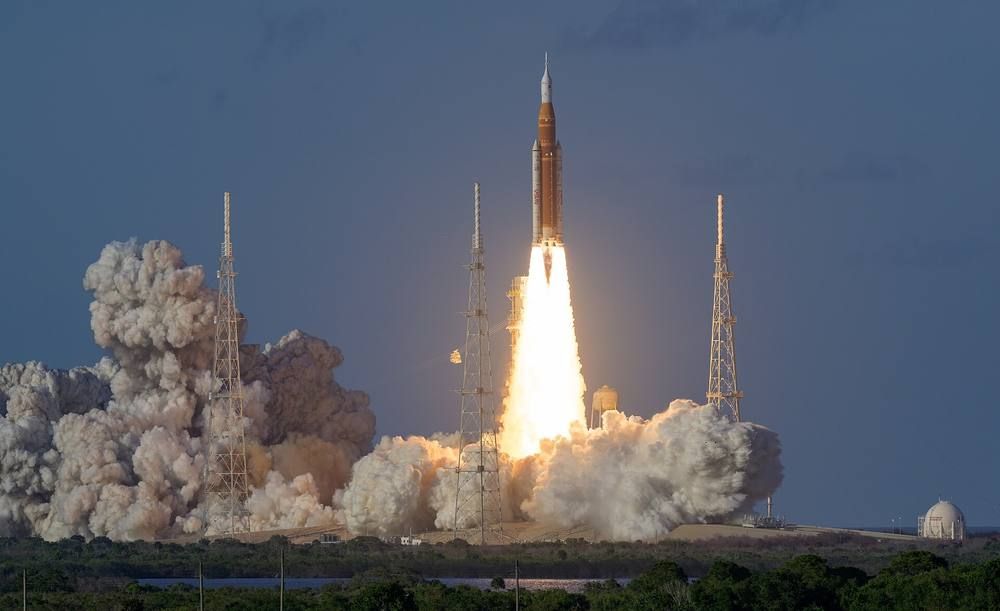
NASA's plans for returning astronauts to the Moon have also changed. Artemis II launched on April 1 and carried four astronauts around the Moon. Artemis III, planned for 2027, is now a test in low Earth orbit, in which the Orion capsule would meet test versions of both SpaceX's Starship lander and Blue Origin's Blue Moon lander. Artemis IV, planned for early 2028, is the first mission meant to land astronauts, and NASA has not yet decided which lander will carry them. Earlier plans had assumed a Starship landing on the first mission. Our article on the competition covers this in more detail.

§ 3Starship reaches orbit
Every one of these plans depends on Starship. It has two stages, a giant booster called Super Heavy and an upper stage that is also called Starship, and both are designed to be recovered and flown again. Falcon 9, SpaceX's current workhorse, recovers only its first stage. Full reuse is what SpaceX says will cut the cost of reaching orbit enough to make cities on other worlds possible. Reuters has reported that SpaceX has spent more than $15 billion on the program. I cover the full flight history, the design changes and the hurdles still ahead in a standalone article on Starship.
On September 28, 2026, Starship's Flight 14 reached orbit for the first time and deployed 26 of SpaceX's larger Starlink V3 satellites. An earlier flight, Flight 13 in July, had already released 20 Starlink satellites on a suborbital path, so Flight 14 was not the first to carry operational satellites, but it was the first to reach orbit.
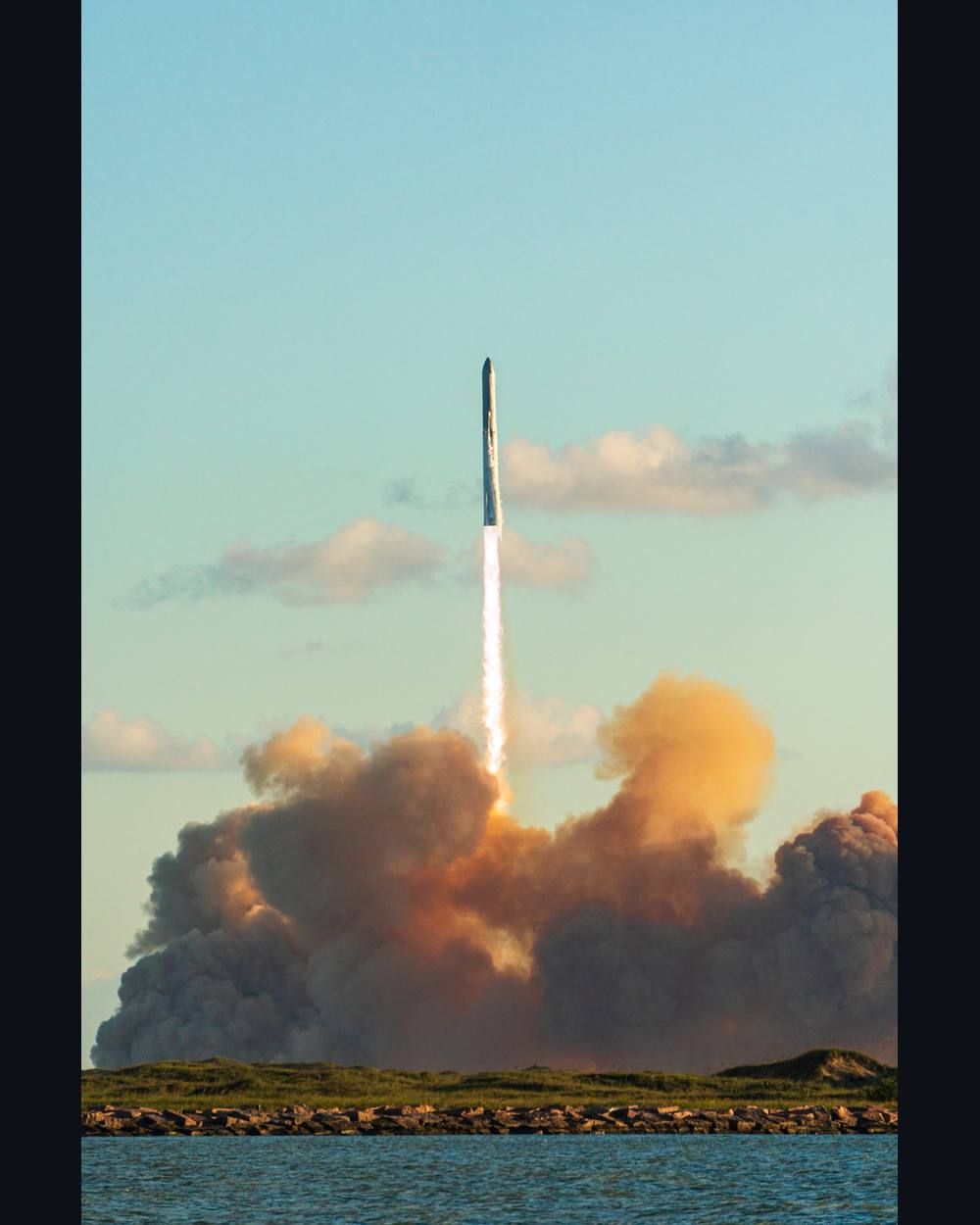

The flight was not flawless. One of the ship's three vacuum engines shut down during ascent. SpaceX at first said the ship would not attempt to go into orbit, then reversed that decision and shortened the mission. The ship splashed down north of Hawaii about three hours after liftoff, tipped onto its side, and residual propellant ignited. SpaceX had not planned to recover it. The booster completed its flight and made a soft splashdown in the Gulf, though several of its engines did not light when needed, and SpaceX destroyed it deliberately afterward.
On the company's October 20 earnings call, Musk said SpaceX would try to catch both the booster and the ship on Flight 15, which he expected next month, and called success "more likely than not." No date has been set, and the FAA had not yet issued the license as of late October. Starship has a history of schedules that moved later than announced. The FAA had approved up to 25 Starship launches a year from Starbase in May 2025, and SpaceX flew five that year.
A major step remains unproven, which is transferring propellant between ships in orbit. To reach the Moon with a full load, a Starship must be refueled in space by other Starships launched as tankers. SpaceX says it will attempt this early next year, and NASA's schedule is more cautious. Our Starship article covers the flight history, the hardware, and the regulatory questions in detail.
§ 4Starlink pays the bills, and AI is catching up
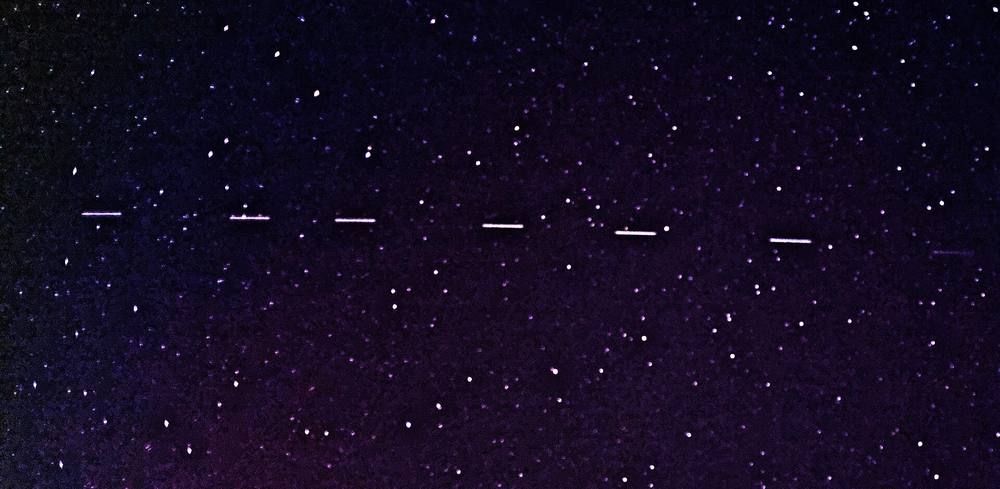
For most of its history, the money for all this came largely from Starlink, SpaceX's satellite internet service. Starlink had 13.6 million consumer subscribers at the end of September, up 1.6 million in the quarter. Average monthly revenue per consumer subscriber rose to $69. The network has about 11,150 satellites in orbit. By our arithmetic from astronomer Jonathan McDowell's October 26 tracking tables, which list about 11,150 active Starlinks and roughly 3,700 other active satellites that can maneuver, Starlink is about three-quarters of the active satellites that can change their orbits, and about two-thirds of all active satellites. In the third quarter, the connectivity business, which includes Starlink, took in $5.2 billion, up 69% from a year earlier.

Starlink also keeps SpaceX's rockets busy. Reuters reported in August that about 79% of Falcon 9 launches in 2026 had carried Starlink satellites. That makes SpaceX its own biggest customer, and the steady stream of launches gives the company far more flight experience than any competitor has. It also means that much of the company's launch business is, in effect, serving itself.
Starlink's growth is the part of the business most investors understand. The fastest growth now comes from somewhere else. SpaceX's AI segment, which it calls "Super Intelligence," brought in $7.6 billion in the third quarter, up from less than a billion a year earlier. The company said that growth came primarily from the ramp of its cloud services agreements, which means renting computing capacity to outside customers. The segment also includes xAI's Grok chatbot, advertising revenue, and, since the middle of the quarter, Cursor, an AI coding company that SpaceX acquired. The space segment, which includes launch, brought in $1.8 billion.
That makes the AI business the largest part of SpaceX by revenue, though it is largely a computing rental business rather than a business built on its own AI models. Critics have noted this. The short seller Jim Chanos has argued that xAI's shift from building frontier AI models toward renting out computing power makes it a commodity business that deserves a much lower valuation. The company's response is that demand for computing exceeds supply, and Musk has said SpaceX could rent out its computing capacity "several times over." SpaceX has also said its customer contracts let it use the capacity for its own model training. SpaceX's own filings also show that two of its large compute deals can be cut short. The Anthropic agreement, worth about $1.25 billion a month through May 2029, can be ended by either side on 90 days' notice, and the Google agreement, worth about $920 million a month from October 2026 to June 2029, can be ended by either side on 90 days' notice after December 31, 2026.
The AI business is also very expensive. SpaceX reported capital spending of $19.6 billion in the third quarter, and it guided to $35 billion to $40 billion in the fourth quarter. Most of that is for computing infrastructure, plus Starship facilities and satellite production.
AI in orbit
The xAI merger came with a plan for space. On January 30, 2026, SpaceX filed an application with the Federal Communications Commission for a constellation of up to one million satellites designed to work as data centers in orbit. The appeal is that space offers constant sunlight and no competition for land or power-grid capacity. The challenges are enormous: launching that much hardware, keeping it cool, and maintaining it.
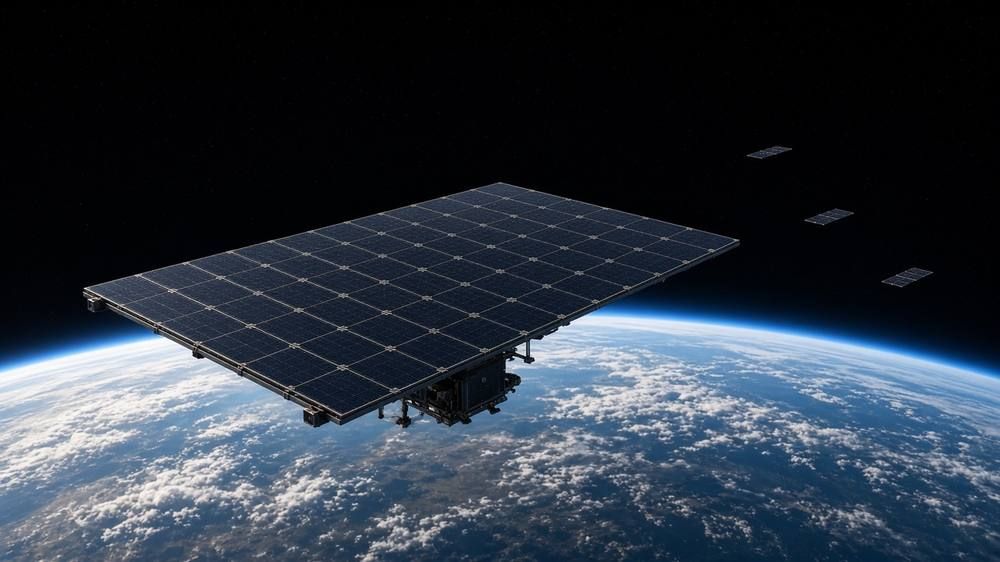
Musk has said Starship could deliver 100 gigawatts a year of computing capacity to high Earth orbit within four to five years, if the other parts of the equation can be solved. That is a target, not a current capability. The FCC accepted the filing for public comment in February, and as of late October it had not approved it. Nothing on this scale has been built.
§ 5The stock market debut, and the questions it raised
SpaceX began trading on the Nasdaq under the ticker SPCX on June 12, 2026. The shares were priced at $135 each, a valuation of about $1.77 trillion. SpaceX's own pricing announcement and Reuters put the base offering at about $75 billion. After the underwriters exercised their overallotment option, CNBC reported the total raised rose to roughly $85.7 billion. Either way, it was the largest initial public offering in history. The stock closed its first day near $161. By late July it had fallen about 50% from its post-IPO peak in mid-June, to a low near $110 to $116 a share, below the IPO price, according to Anadolu Agency and Bloomberg. It closed at $147.79 on October 20, which values the company at roughly $1.9 trillion to $2 trillion.
The listing also drew criticism, and it is part of the story. Only about 5% of the shares were offered to the public, far below the usual minimum, and Nasdaq changed its rules to allow very large new listings into its main index early, while S&P Dow Jones Indices kept its existing rules. Critics, including New York University professor Scott Galloway, argued that this limited supply while forcing index funds to buy. SpaceX's prospectus shows Musk holding about 42% of the economic stake but roughly 82% of the votes because of his super-voting Class B stock, a structure that law professors Lucian Bebchuk and Kobi Kastiel argue gives him substantial value at the expense of public investors.
Valuation was the biggest argument. Finance professor Aswath Damodaran valued the company at roughly $1.25 trillion to $1.35 trillion and said the offering was too richly priced. Morningstar put fair value at roughly $780 billion before the IPO, less than half the IPO valuation, and its analysts called the company overvalued, while expecting the shares to hold up in the near term because of the small float. SpaceX had a net loss of $4.94 billion in 2025, which made it ineligible for the S&P 500. Supporters point out that the Anthropic and Google compute contracts show demand for the AI business, and that Starlink is profitable and growing.
The third quarter was a strong one by most measures. Revenue was $14.6 billion, up 161% from a year earlier and above analyst estimates, and net income was $4.4 billion, compared with a loss of $1.1 billion a year earlier. Investors will be watching whether such results continue as AI spending climbs.
The same day, Musk confirmed that SpaceX and Tesla had each formed special committees of independent directors to study a possible merger. Musk is not on either committee and described himself as a conflicted party. No terms have been agreed, and he said it would be "overstating it" to call a merger a certainty. Any deal would need approval from both companies' shareholders.
§ 6How it started
Musk founded SpaceX in 2002, partly with money from the sale of PayPal. The company grew out of an earlier idea. In 2001 and 2002, Musk traveled to Russia hoping to buy refurbished missiles to launch a small greenhouse experiment to Mars. The prices were too high, and he decided to build rockets himself, with the goal of making spaceflight much cheaper.
The company's first rocket, the small Falcon 1, failed on its first three launches between 2006 and 2008, leaving SpaceX close to running out of money. On September 28, 2008, the fourth Falcon 1 reached orbit, the first privately developed liquid-fueled rocket to do so. Starship's first orbital flight came exactly 18 years later, to the day.
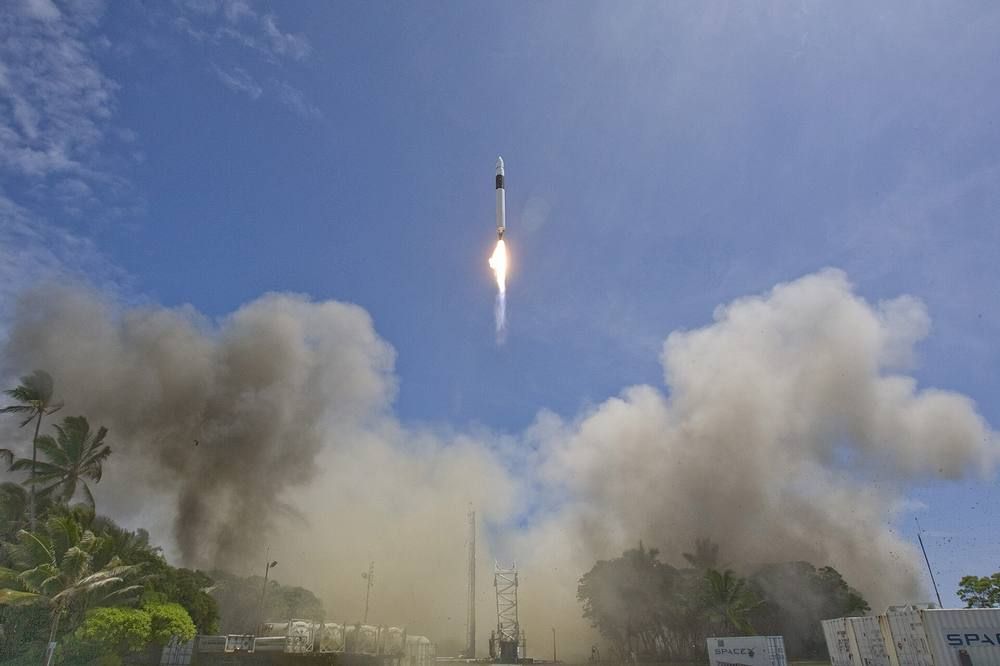

SpaceX's relationship with NASA kept it alive. In 2006, NASA selected the company for its Commercial Orbital Transportation Services program to develop cargo delivery to the space station, after SpaceX had protested a 2004 sole-source contract to another company. In December 2008, a few months after Falcon 1 reached orbit, NASA awarded SpaceX a contract worth about $1.6 billion for 12 cargo flights to the station. That work funded the larger Falcon 9 rocket and the Dragon capsule.
The milestones that followed changed the industry. Falcon 9 first launched in 2010. In December 2015, a Falcon 9 first stage landed after delivering a payload to orbit, the first time that had been done. In March 2017, SpaceX flew a used orbital booster for the first time. On May 30, 2020, NASA astronauts Bob Behnken and Doug Hurley launched on a Falcon 9 and Crew Dragon, the first astronauts to launch from U.S. soil since the space shuttle retired in 2011. In 2025 Falcon 9 flew a record 165 times, and in August 2026 a single booster flew for the 37th time. The full story of how the rocket was built and how it learned to land and fly again is in my standalone article on Falcon 9.
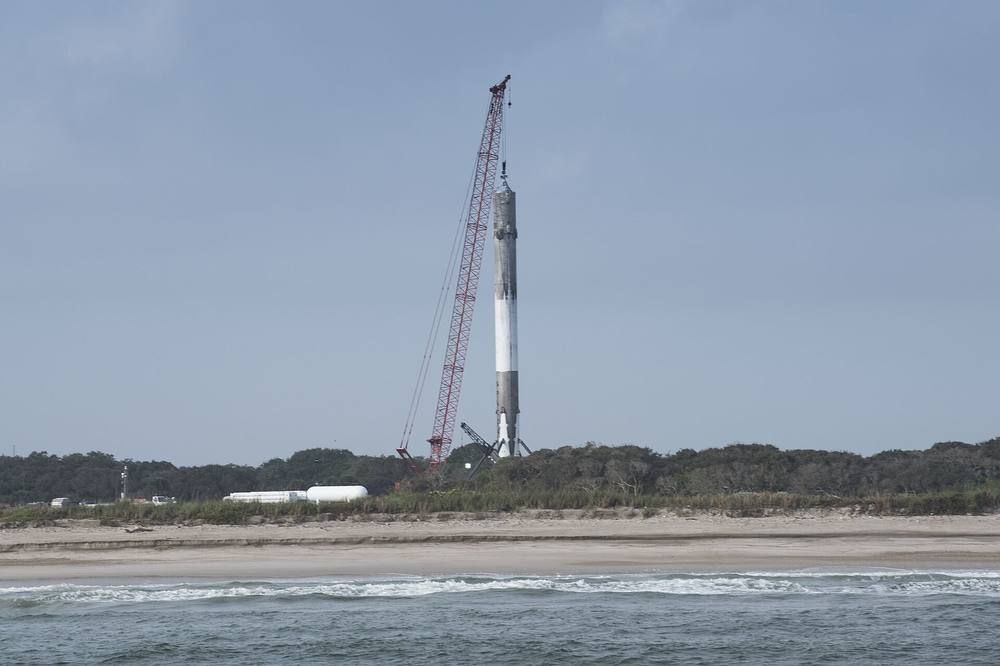

SpaceX counted its 700th Falcon-family mission on September 13, and by late October the family had flown about 712 times, including five Falcon 1 flights. Counting only Falcon 9 and Falcon Heavy, our arithmetic puts the success rate at about 99.6 percent. That record, including its failures, is covered in our Falcon 9 article.
§ 7The competition
SpaceX has flown 121 of the world's 248 orbital launch attempts in 2026, about 49%, according to the Flight Atlas tracker, which we could not independently verify against another source. Its rivals are mostly still building toward the future, and several have had setbacks this year. Each rival gets a full treatment in my standalone article on the competition.
Blue Origin, owned by Jeff Bezos, has a large rocket called New Glenn. It exploded on the pad during a static-fire test on May 28, and Blue Origin has said the cause was a valve in one of the engines. The company aims to fly again by the end of the year, a timeline that Ars Technica described as "very aggressive." Blue Origin is also developing the Blue Moon lunar lander that could compete with Starship for the Artemis landing.
United Launch Alliance's Vulcan rocket has been paused since February because of a booster issue, and the U.S. Space Force has reassigned six national security launches from ULA to SpaceX. The Pentagon is now relying heavily on one launch provider for its most important missions, a point that critics of SpaceX's market position have raised.
Rocket Lab is the second-busiest U.S. launch company, with its small Electron rocket. Its reusable Neutron rocket slipped again in October, and the debut is now planned for 2027. Amazon's Starlink competitor, Amazon Leo, formerly Project Kuiper, had nearly 400 satellites in orbit as of early July, out of 3,232 authorized by the FCC for its first-generation system, and is flying many of them on Europe's Ariane 6 rocket.
China became the second country to recover an orbital rocket booster this year. In July, a state-built Long March 10B first stage was caught by a net aboard a ship. In August, the private company LandSpace landed its Zhuque-3 booster on land, using engines and landing legs in the same way as Falcon 9, though the booster later toppled after a fire. A single recovery does not make a reusable rocket program, but it shows the gap is narrowing. Our competition article covers every one of these rivals in detail.
§ 8Risks and criticism
Any fair account of SpaceX includes the questions that surround it. The first is concentration. SpaceX launches about half of the world's rockets, operates most of the active satellites in orbit, and is, for now, the only U.S. company routinely flying NASA crews. NASA has moved to fund certification of ULA's Vulcan for crew flights, in part to have a second option. A single company, controlled by one person, holding that position is a point that critics regularly raise.
The second is safety and regulation. Starship has had failures that scattered debris over the Caribbean, and ProPublica reported that the FAA's response left airliners holding, with one flight declaring a fuel emergency. The FAA has just opened a major environmental review of Starship operations at Starbase, with public comments due November 30. The Government Accountability Office has also recommended that the FAA write criteria for when companies lead their own mishap investigations. Our Starship article covers these in more detail.
The third is the company's governance and finances. Musk's control, the small public float, the dependence of AI revenue on a few large customers, and the heavy capital spending are all points that analysts have raised. A possible merger with Tesla adds another layer of complexity.
The fourth is timelines. Musk's schedules have often slipped, and the Moon and Mars goals, the orbital data centers, and the Starship launch rates all depend on dates that have not yet been met. Supporters argue that SpaceX has repeatedly done what critics said was impossible, including landing rockets, reusing them, and flying crews. Both statements are true, and the next year should show which pattern matters more.
§ 9What to watch
Several developments over the next year will show whether SpaceX's goals are moving closer or slipping further away. The first is Starship's next flights. Flight 14 proved Starship can reach orbit and deliver satellites. The next test is consistency, which means whether SpaceX can fly again soon, recover both stages, and stop losing engines along the way.
The second is orbital refueling. A ship-to-ship propellant transfer is the single biggest technical hurdle between Starship and the Moon, and the first successful demonstration would be the clearest sign that the lunar plan is real. The third is the lunar schedule. NASA's own dates and the earlier reported March 2027 target will show how much slippage there is, and which lander NASA chooses for the first landing.
The fourth is Starlink V3, since the larger satellites are designed to fly on Starship, and how quickly they go up will affect both Starlink's growth and how much work moves off Falcon 9. The fifth is the FCC's response to the one-million-satellite orbital data center filing. The sixth is the AI business, in particular whether the large compute contracts are renewed and whether capital spending of $35 billion to $40 billion in a single quarter turns into revenue.
The Tesla committees are next. Any filing that names advisers, sets terms, or schedules a vote would turn merger talk into a formal process. And last, watch the competitors. New Glenn and Vulcan returning to flight, Neutron's first launch, and Amazon Leo's beta service would all narrow SpaceX's lead.
§ 10The bottom line
SpaceX's stated mission has not changed: make life multiplanetary and carry consciousness to the stars. Its road map has. The Moon now comes first, as a faster place to learn how to live off Earth. Mars remains the long-term destination. AI has become both the company's biggest source of revenue and a new reason to launch.
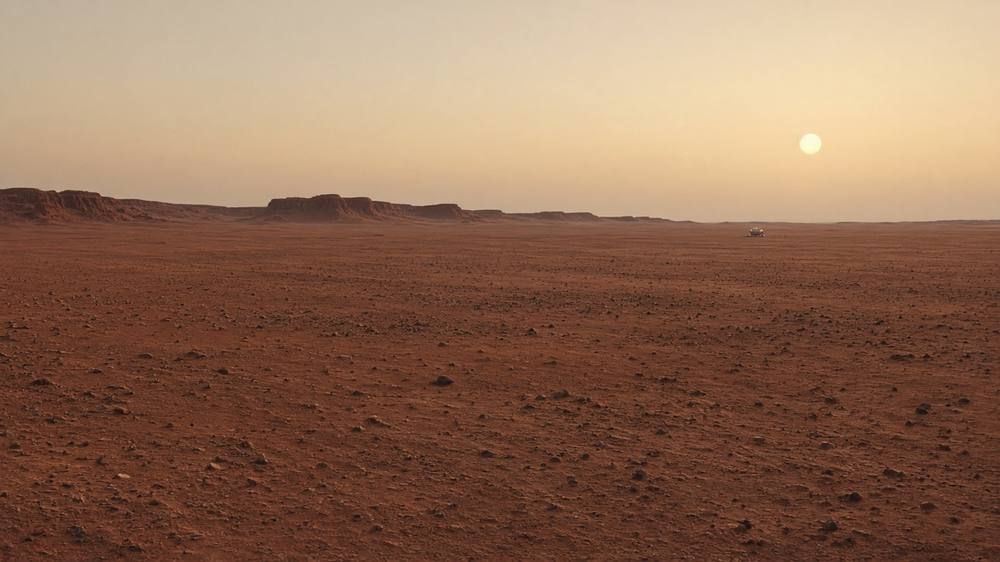
All of it still depends on Starship. It has reached orbit once. It still must prove it can refuel in orbit, land on the Moon, and fly reliably and often. Until then, cities on the Moon and Mars remain goals, not guarantees.
For now, SpaceX leads the launch industry by a wide margin. Its competitors are grounded, still in development, or years behind. Its valuation, its control structure, and its schedule are all open questions. The next year of flights, earnings, and regulatory decisions will show whether the company's biggest promises are getting closer.
§ 11Watch & Listen
- Rumble: The Ancient Sky – link coming soon
- YouTube: The Ancient Sky – link coming soon
Watch & Listen
Hear this entry read aloud. Coming soon — the channels are not live yet.
Sources
Mission, xAI, and the IPO
- Reuters – Musk's SpaceX to merge with xAI, combined valuation $1.25 trillion (Feb. 2, 2026)
- CNBC – Musk's xAI and SpaceX merger, the biggest ever (exchange ratio and valuation ranges)
- SpaceX Form S-1, Exhibit 2.1 (xAI merger agreement)
- SpaceX investor relations – Announcement of pricing of initial public offering
- Reuters – SpaceX prices record $75 billion IPO at $135 a share (June 11, 2026)
- CNBC – SpaceX raises $75 billion in record-setting IPO
- CNBC – Underwriters exercise SpaceX overallotment option (June 15, 2026)
- Bloomberg – SpaceX falls 20% below IPO price (July 28, 2026)
- Anadolu Agency – SpaceX shares sink to all-time low, lose half their value from peak
- StockAnalysis – SPCX price history (Oct. 20 close of $147.79)
- SpaceX Form S-1 (SEC filing)
- Fortune – SpaceX S-1 mission
- CNBC – SpaceX IPO live updates
Moon first, Mars later
- Space.com – When will SpaceX and Blue Origin fly to the Moon? NASA reveals lander timelines and an Artemis III update (Oct. 2026)
- NASA – Liftoff: NASA launches astronauts on historic Artemis Moon mission (Artemis II, April 1, 2026)
- Business Today – Musk, "The Moon is a distraction" (Jan. 2025)
- Reuters – SpaceX prioritizes lunar "self-growing city" over Mars, Musk says
- Reuters – SpaceX delays Mars plans to focus on 2027 Moon landing, WSJ reports
- NASA – Artemis III mission to test future Moon lander operations
- NASA – NASA adds mission to Artemis lunar program, updates architecture
Starship
- SpaceX – Starship Flight 13
- SpaceX – Starship Flight 14
- Reuters – SpaceX launches 13th Starship test, briefly deploys first upgraded Starlinks (July 24, 2026)
- Spaceflight Now – Starship returns to Earth after three-hour flight (Sept. 28, 2026)
- Ars Technica – FAA clears SpaceX for 25 launches a year from its Texas launch site (May 2025)
- Space.com – SpaceX shatters its rocket launch record: 165 Falcon 9 flights and five Starship flights in 2025
- NASASpaceflight – Starship makes orbit, Flight 15 preps in full swing
- Space.com – Starship Flight 14 reaches orbit
- Yahoo Finance / Reuters – SpaceX spending on Starship tops $15 billion
- Federal Register – FAA programmatic environmental impact statement notice for Starship at Starbase
- ProPublica – How SpaceX rockets put passenger planes at risk
- U.S. GAO – FAA should improve its mishap investigation process (GAO-24-105561)
IPO critiques and governance
- CNBC – Aswath Damodaran is not buying SpaceX, "too richly priced" (June 7, 2026)
- CNBC – SpaceX is worth less than half its IPO target price, Morningstar says (June 3, 2026)
- Morningstar – Why we think the SpaceX IPO is overvalued
- Morningstar – How index funds are adapting to mega-IPOs (about 5% float)
- Reuters – SpaceX blocked from early S&P index entry as S&P reaffirms existing rules (June 4, 2026)
- Reuters – Musk and insiders to retain voting control of SpaceX after IPO, filing shows (April 21, 2026)
- SpaceX final prospectus, Form 424(b)(4) (SEC)
- Harvard Law School Forum on Corporate Governance – Top IPO, weak governance (Bebchuk and Kastiel, May 19, 2026)
- Bloomberg Talks – Jim Chanos talks SpaceX IPO
Starlink, AI, and the third quarter
- Jonathan McDowell – Active satellites in orbit, tallies (Oct. 26, 2026)
- Jonathan McDowell – Starlink statistics
- TechCrunch – How long is Anthropic's lease with SpaceX? (90-day notice terms)
- SpaceX free-writing prospectus – Google compute agreement (SEC)
- Spaceflight Now – Starlink 15-15 launch and Q3 call recap (11,100 Starlinks in orbit)
- SpaceX Q3 2026 earnings call transcript (Musk, Shotwell, and Johnsen remarks)
- Broadband Breakfast – Starlink reaches 13.6 million subscribers as revenue jumps 161%
- Via Satellite – Starlink growth slows as AI takes the lead at SpaceX in Q3
- Yahoo Finance – SpaceX beats Q3 2026 estimates
- Reuters – SpaceX's satellite ambitions squeeze out rivals reliant on its rockets (Aug. 4, 2026)
- Reuters – SpaceX seeks FCC nod for solar-powered satellite data centers
- FCC – Space Bureau accepts for filing SpaceX's application for orbital data centers
- Data Center Dynamics – Elon Musk says SpaceX "will be doing" data centers in space
- NBC News – SpaceX and Tesla special committees
- TechCrunch – Boards form special committees to review merger
- Axios – SpaceX and Tesla explore merger
Where it all started
- NASA – COTS Phase 1 selections announced (Aug. 18, 2006)
- Space.com – SpaceX and Rocketplane Kistler win NASA COTS competition
- SpaceNews – NASA awards space station Commercial Resupply Services contracts to SpaceX and Orbital (Dec. 2008)
- NASA Office of Inspector General – Commercial Resupply Services to the ISS (IG-13-016)
- FAA – 2008 Year in Review (Falcon 1 orbital flight)
- The Space Review – Elon Musk's early path to SpaceX
- Space.com – SpaceX launches 700th Falcon mission (Sept. 13, 2026)
- Spaceflight Now – Falcon Heavy flies first NRO mission (14th Falcon Heavy flight)
- Space.com – Falcon 1 reaches orbit (Sept. 28, 2008)
- Spaceflight Now – NASA cargo contract award (Dec. 2008)
- NASA – Congratulations to SpaceX on historic booster landing (Dec. 2015)
- NASA – SpaceX Demo-2 liftoff (May 30, 2020)
- Space.com – 37th booster flight on 100th Falcon 9 launch of 2026
Who is chasing SpaceX
- Spaceflight Now – Blue Origin identifies engine issue behind New Glenn explosion (Aug. 6, 2026)
- Ars Technica – Blue Origin vows to fly New Glenn before the end of this year ("very aggressive" timeline)
- Reuters – Amazon to start initial Leo service this year as network nears 400 satellites (July 2, 2026)
- Ars Technica – FCC lifts looming deadline for Amazon Leo constellation (3,232 authorized satellites)
- Reuters – China tests sea-based rocket booster recovery system (July 10, 2026)
- Reuters – LandSpace nails rocket booster landing (Aug. 18, 2026)
- Flight Atlas – SpaceX launch tracker (121 of 248 orbital launches in 2026)
- SatNews – Space Force reassigns six national security launches to SpaceX
- Via Satellite – Neutron debut delayed to 2027
- Interesting Engineering – China lands a booster on legs after net catch
Videos (views checked October 27, 2026)
- NASA, "NASA's Artemis II Crew Launches To The Moon (Official Broadcast)," 19,284,170 views
- Everyday Astronaut, "Complete Guide To Starship: Falcon 9 VS Starship," 3,931,048 views
- SpaceX (company video), "Starship - Critical Path," 4,616,413 views
- SpaceX (company video), "Starship - The Holy Grail of Rocketry," 2,803,265 views
- Real Engineering, "How Will SpaceX Get Us To Mars? (2016, before the Moon-first shift)," 2,069,463 views
Also see (Wikipedia and Grokipedia; secondary sources, cross-checked against the primary and credible sources above and never the only support for a claim)
- Wikipedia – SpaceX: en.wikipedia.org/wiki/SpaceX · Grokipedia: grokipedia.com/page/SpaceX
- Wikipedia – Starlink: en.wikipedia.org/wiki/Starlink · Grokipedia: grokipedia.com/page/Starlink
- Wikipedia – Falcon 9: en.wikipedia.org/wiki/Falcon_9 · Grokipedia: grokipedia.com/page/Falcon_9
- Wikipedia – History of SpaceX: en.wikipedia.org/wiki/History_of_SpaceX · Grokipedia: grokipedia.com/page/History_of_SpaceX
- Wikipedia – Commercial Resupply Services: en.wikipedia.org/wiki/Commercial_Resupply_Services · Grokipedia: grokipedia.com/page/Commercial_Resupply_Services
- Wikipedia – Artemis program: en.wikipedia.org/wiki/Artemis_program · Grokipedia: grokipedia.com/page/Artemis_program
- Wikipedia – Starship HLS: en.wikipedia.org/wiki/Starship_HLS · Grokipedia: grokipedia.com/page/Starship_HLS
- Wikipedia – Starship flight test 13: en.wikipedia.org/wiki/Starship_flight_test_13 · Grokipedia: grokipedia.com/page/Starship_flight_test_13
- Wikipedia – Amazon Leo: en.wikipedia.org/wiki/Amazon_Leo · Grokipedia: grokipedia.com/page/Amazon_Leo
- Wikipedia – Zhuque-3: en.wikipedia.org/wiki/Zhuque-3 · Grokipedia: grokipedia.com/page/Zhuque-3
- Wikipedia – Initial public offering of SpaceX
- Wikipedia – Starship flight test 14
- Wikipedia – List of Starship launches
- Wikipedia – 2026 New Glenn rocket explosion