Gaming
The Rise of the Gamer Influencer: How Ninja, Shroud, TimTheTatman and Dr Disrespect Helped Build an Industry
By Darrell Wallen
Would you prefer to listen?
In 2011, watching strangers play video games was a niche habit on a site few people had heard of. Today streamers sell subscriptions by the million, appear on magazine covers and move audiences from one platform to another, and no single number captures what the business is worth.
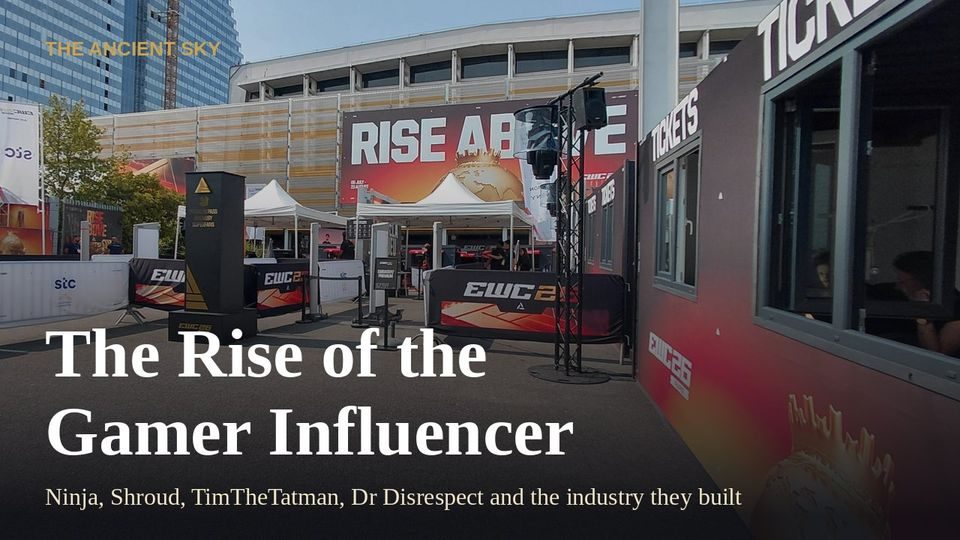
In June 2011, a small site called Twitch launched as a spin-off of a general live-video service called Justin.tv. TechCrunch reported at the time that the new gaming portal was drawing about 3.2 million unique visitors a month, who generated 45 million video views. The average gamer on the site was watching about four and a half hours a month.
Fifteen years later, one analytics firm, Streams Charts, counts 31.7 billion hours of live video watched across the platforms it tracks in a single quarter. The people who earn their living in front of those audiences are no longer a curiosity. Some are household names. A few have also become cautionary tales.
This is a story about four of them, Ninja, Shroud, TimTheTatman and Dr Disrespect, and about the money, the platforms and the audience that grew up around them. The focus is on the people and on how they changed entertainment. But the platforms decide who gets paid, who gets seen and who gets removed, so they get their own section near the end.
§ 1From Justin.tv to a near-billion-dollar deal
Twitch grew out of Justin.tv, which let anyone broadcast live video. The gaming portal that TechCrunch described in 2011 was an early sign that the most dependable audience for live video was people who wanted to watch other people play.
Big business noticed in 2014. On August 25 of that year, Amazon announced it would buy Twitch for about 970 million dollars in cash. In its press release, Amazon said that in July 2014 more than 55 million unique visitors had watched more than 15 billion minutes of content on Twitch, produced by more than a million broadcasters. The BBC called the deal a surprise, and noted that Google's YouTube had been reported earlier in the year to be in late-stage talks to buy Twitch for a similar amount.
YouTube answered with its own product. On August 26, 2015, it launched YouTube Gaming, a dedicated site and app. The Guardian reported that it came with a directory of more than 25,000 games, and quoted YouTube's head of gaming, Ryan Wyatt, as saying that the company was doing billions of hours of watch time a month in gaming. The Guardian also reported that the YouTube gaming star Felix Kjellberg, known as PewDiePie, had earned 7.4 million dollars in 2014 from his channel and related sponsorships. So the money was already real before live streaming took off.
That competition is the background to everything that follows. A streamer is a small business with one large asset, the audience that follows them. The platform that holds that audience sets the terms. And much of the last decade of gaming news is about what happens when a streamer decides to move.
§ 2Ninja and the night Fortnite went mainstream
Richard Tyler Blevins, known as Ninja, was already well known before March 14, 2018. That night he played Fortnite with the rapper Drake, the Pittsburgh Steelers receiver JuJu Smith-Schuster and the rapper Travis Scott, and the stream broke a Twitch record. The Verge reported a peak of 628,000 viewers watching at once. Polygon reported more than 635,000. The two outlets differ slightly, so about 630,000 is a fair way to put it. Either way, it passed the previous mark of 388,000, which Polygon described as Dr Disrespect's record for a non-tournament stream. Polygon also noted that a tournament broadcast, the ELEAGUE Major in Boston, still held the all-time Twitch record at more than 1.1 million.
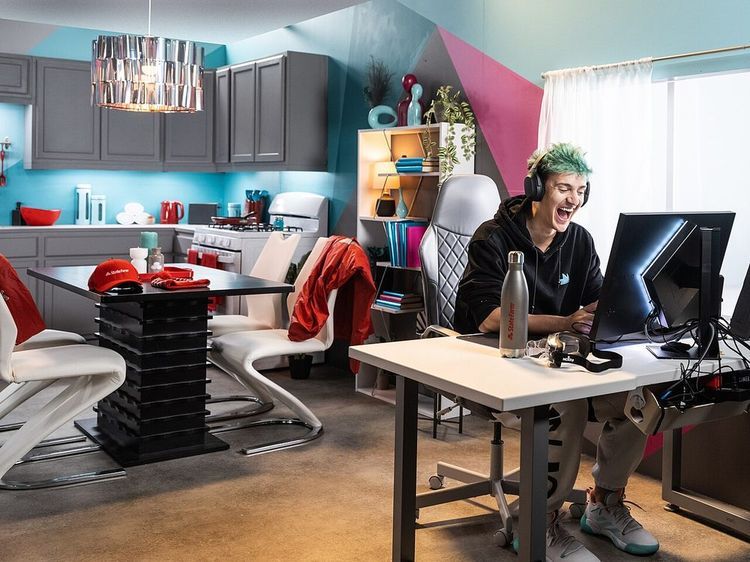
The number mattered less than the guest list. A pop star had gone to a streamer's channel to reach fans, rather than the other way around. In September 2018, Variety reported that Ninja would be the first professional esports player on the cover of ESPN The Magazine. In January 2020, Epic Games announced its Icon Series, a line of Fortnite skins and emotes based on top creators, and Video Games Chronicle reported that Ninja's was the first.
His career after that is a useful case study in what an audience is worth, and in how fragile it can be. On August 1, 2019, Ninja announced that he was leaving Twitch to stream exclusively on Microsoft's Mixer. The Verge later reported that he left for a contract reportedly worth between 20 and 30 million dollars. Mixer was the smallest of the major platforms, and The Verge wrote that Ninja saw a big decrease in viewership after the move, and that his follower count dropped by more than 10 million. When Microsoft announced on June 22, 2020, that it was shutting Mixer down, it released its exclusive streamers from their contracts and sent its users to Facebook Gaming. Mixer's last day was July 22, 2020.
Ninja went back to Twitch. GeekWire reported on September 10, 2020, that he had signed a new multiyear exclusive deal with Amazon's service. In September 2022, PC Gamer reported that he had dropped the Twitch contract to stream on several platforms at once. He said at the time that an exclusivity contract usually comes with a big guaranteed check, and that without one he was on his own. In April 2026, Dexerto reported that he had announced an indefinite break from streaming, citing cheating in the game Arc Raiders. We could not confirm from a primary source whether he has returned since.
§ 3Shroud, the aim and the audience
Michael Grzesiek, known as Shroud, came to streaming by a different road. Engadget described him as a former professional Counter-Strike player who built his following on his skill in shooters such as PUBG, Apex Legends and Call of Duty. When he left Twitch in October 2019, Engadget reported that he had more than 7 million Twitch followers and 5.5 million YouTube subscribers, and that viewers had watched 18 million hours of his Twitch channel between July and September of that year, according to StreamElements.
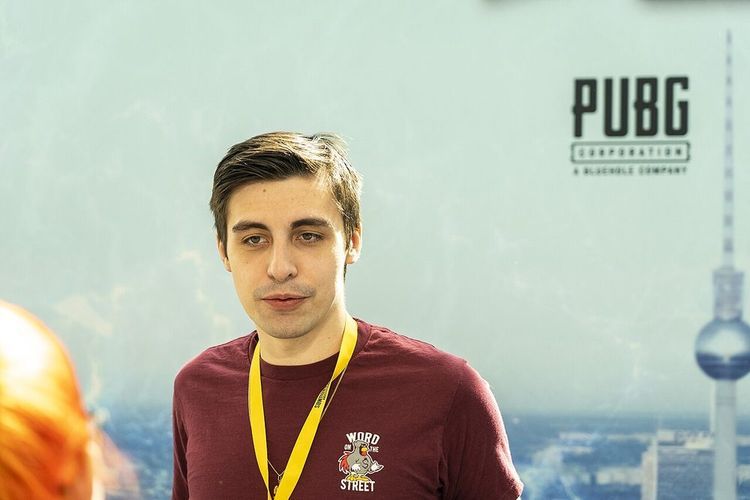
On October 24, 2019, Shroud followed Ninja to Mixer. Engadget described the pair of moves as a land grab for exclusive talent, comparable to the contest among Netflix, Disney and Apple for television shows. The comparison holds up. The platforms had realized that a handful of faces could pull an audience to a service, and they began to pay accordingly.
When Mixer shut down, Shroud spent more than a month deciding where to go. On August 11, 2020, he announced an exclusive return to Twitch. The next day, The Verge reported, nearly 500,000 people were watching before his stream officially began, and he passed half a million viewers soon after. He was playing Valorant, a new game, and The Verge said he accounted for more than 80 percent of its Twitch viewership at that moment. The Verge also reported that he had possibly netted about 10 million dollars from the Mixer detour, which was a reported figure rather than a confirmed one, and said it was unclear what Twitch paid to bring him back.
As of October 27, 2026, Shroud's Twitch page lists 11.3 million followers and a posted streaming schedule.
§ 4TimTheTatman and the pull of home
Tim Betar, known as TimTheTatMan, built his audience on Twitch, where he was partnered in 2012, according to a Twitch statement quoted by The Verge. His Twitch page lists 7.6 million followers as of October 27, 2026.
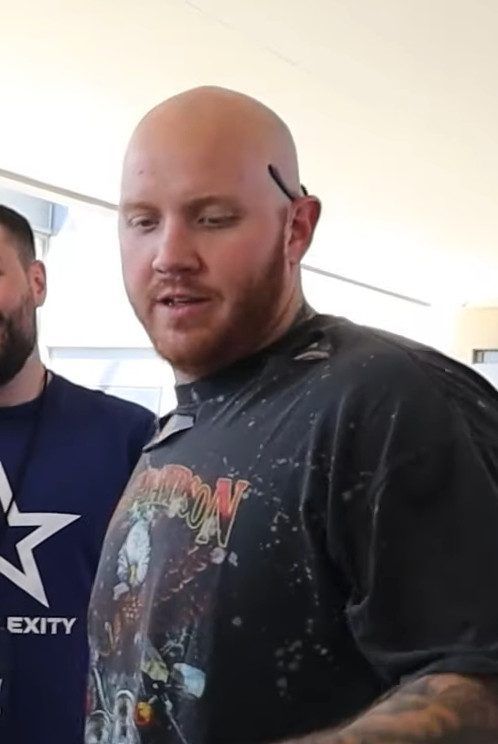
His career also shows how much platform deals matter. In September 2021, The Verge reported that he was leaving Twitch to stream exclusively on YouTube Gaming, giving up about 7 million Twitch followers. He already had 3.8 million YouTube subscribers. YouTube declined to comment on the terms. Betar told Insider that the move would let him spend more time with his family, because he had a wife and son and could no longer stream as many hours as he used to.
In September 2024, Dexerto reported that Betar's YouTube exclusivity had ended, along with that of the streamers DrLupo and FaZe Swagg, and that all three had gone back to Twitch. Dexerto said that Betar and DrLupo had been streaming on both platforms at once, and that viewers preferred Twitch, with about a 60 to 40 split in Twitch's favor for Betar. It is a recurring pattern. Streamers sign for money, then find that part of the audience is attached to a place as well as to a person.
§ 5Dr Disrespect, the biggest ban in streaming
Herschel Beahm IV, known as Dr Disrespect, made his name with a loud character in a black mullet wig and mirrored sunglasses. In March 2020, The Verge reported, he signed a two-year exclusive contract with Twitch for an undisclosed amount. Three months later, on June 26, 2020, his channel vanished. Twitch would not confirm that it had banned him or say why. NBC News said he had more than 4 million Twitch followers before the removal.
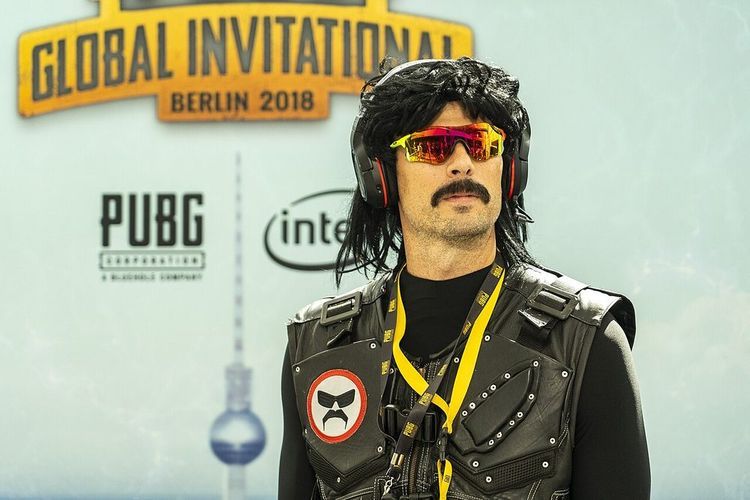
The reason stayed unexplained for four years. In June 2024, a former Twitch employee, Cody Conners, wrote on X that Beahm had been banned over messages to a minor. Conners made that claim publicly, and The Verge reported that a second former employee, speaking anonymously, described the same events. On June 25, 2024, Beahm posted a long statement on X. In it he confirmed that in 2017 he had exchanged Twitch whisper messages with a minor, which he said "sometimes leaned too much in the direction of being inappropriate." He wrote that he never had real intentions behind them, that nothing illegal happened, that no pictures were shared and that he never met the person. NBC News reported that he also said he had never been criminally charged, and that a dispute with Twitch had gone through arbitration and ended in a settlement. Those are Beahm's own statements. Twitch has not commented publicly on the matter, according to NBC.
The business effects followed within days. The Verge reported that Midnight Society, the game studio he co-founded, ended its relationship with him, as did the headset maker Turtle Beach. YouTube suspended monetization on his channel, saying he had violated its Creator Responsibility policy following serious allegations. In January 2025, The Verge reported that Midnight Society was shutting down, and that YouTube had restored his ability to earn money after what its spokesperson called a careful review of the channel's recent activity, with a warning that further violations would bring action.
By then he had changed platforms. On November 25, 2024, Rumble announced that Dr Disrespect had joined the platform and would lead Rumble Gaming. The release said an agreement that included equity with milestones made up most of his compensation. Rumble's chairman and chief executive, Chris Pavlovski, said in it that Dr Disrespect would give a much-needed injection into the company's gaming category. Rumble's own site shows a stream by Dr Disrespect dated October 8, 2026, in which he plays Arc Raiders. We could not confirm from a primary source whether he also streams elsewhere.
The case matters here for what it says about the business. A streamer's brand can be worth millions, and it can lose most of its commercial partners within days if the public turns. Unlike a television host, the streamer owns the relationship with the audience, and carries the risk of it too.
§ 6How big is the business?
People often ask whether this is a million-dollar or a billion-dollar industry. The honest answer is that no single agreed number exists. The money is spread across platforms, sponsors, game publishers, tournament organizers and the creators themselves, and nobody counts all of it. What exists are pieces.
Start with audience. Streams Charts said in its third-quarter 2026 report that viewers watched 31.7 billion hours across the platforms it tracks, a record. It put YouTube's share at 43 percent, TikTok LIVE's at 33.5 percent, and Twitch's at 14.2 percent, or 4.51 billion hours. YouTube's total includes sports; Streams Charts said the World Cup final pushed YouTube to an all-time high of more than 36 million concurrent viewers. The same report said YouTube Gaming generated about 1.98 billion hours, and that Rumble lost nearly half of its quarterly hours watched.
A rival firm, Stream Hatchet, reported for the full year 2025 that live viewing reached 36.4 billion hours, up 6 percent and close to the 2021 peak of 37.1 billion. NetInfluencer, summarizing that report, said Twitch led with 19.2 billion hours but lost 8.3 points of market share, while Kick grew 131 percent to 4.5 billion hours. Stream Hatchet said YouTube Gaming had its best live year ever, at 8.8 billion hours.
Those two sets of numbers should not be compared directly. The firms track different platforms, cover different kinds of content and use their own methods. Streams Charts includes TikTok LIVE and general live viewing, for example, and it cautions that earlier research found unusual audience patterns on one of Kick's top channels. Both firms agree on the direction. Live streaming is large, it is growing again, and it is spreading across more platforms.
The creator economy is a wider category than gaming. In April 2023, Goldman Sachs estimated that the global creator economy was worth about 250 billion dollars and could roughly double to 480 billion dollars by 2027. That is a forecast, not a measurement, and it covers every kind of creator, from makeup tutorials to cooking channels. Goldman also said that brand deals were the main source of creator revenue, at about 70 percent, and that only about 4 percent of an estimated 50 million creators were professionals earning more than 100,000 dollars a year. The top is high and the base is crowded.
Esports, the competitive side, increasingly overlaps with the creators. The organizers of the 2026 Esports World Cup, held in Paris this summer, said the event had a record prize pool of 75 million dollars, 850 million viewers and 440 million hours watched. Those are the organizers' own figures and were not independently audited. They also said that 5,000 co-streamers broadcast the event and that more than 350 creators attended in person. Stream Hatchet made a similar point about 2025, saying co-streamers accounted for half of esports viewing hours. A large part of the audience now arrives through a personality rather than an official broadcast.
At the very top, the numbers get strange. Guinness World Records lists Kai Cenat as holder of the record for most subscribers on a Twitch channel. Tubefilter reported that he passed 1.1 million active subscribers in September 2025 during a month-long broadcast that ended with a collaboration with LeBron James. He is also a sign of how the category has changed. Stream Hatchet said that non-gaming content, such as Just Chatting and IRL streams, made up 22 percent of Twitch viewing in 2025. A gamer influencer is now often someone who started with a game and became a general entertainer.
§ 7From the game to the main stage
The crossover between games and the rest of entertainment has changed who the stars are. In April 2020, Travis Scott performed a concert inside Fortnite. Polygon reported, citing Epic Games, that the event reached more than 12.3 million concurrent players, and that more than 27.7 million players took part in total, with the event attended 45.8 million times. That event, together with the Ninja and Drake stream two years earlier, showed the music and sports industries that games and streamers could be a stage.
The streamers have gone the other way too. Ninja made the ESPN cover. Cenat is a co-star, with Kevin Hart and the creator Druski, of a comedy-horror film called Livestream from Hell, according to Tubefilter. NBC News noted that Dr Disrespect, before his troubles, had partnerships with large consumer brands, including Mountain Dew and the NFL. These creators are no longer niche figures who occasionally cross over to television. For many viewers, they are the television.
§ 8What it means for young people
For teenagers, the platform is the habit. The Pew Research Center reported in 2024, from a survey it conducted in 2023, that 85 percent of American teens play video games, including 97 percent of boys and about three-quarters of girls. Pew said that 72 percent of teens who play say one reason is to spend time with others, and that 47 percent of teen players have made a friend online through a game. It also found that 17 percent of all teens use Twitch, and 30 percent of teens who identify as gamers do. In Pew's 2025 survey of teens, published in December, roughly nine in ten teens said they use YouTube, and about three-quarters said they use it daily.
Careers are part of the picture. A Morning Consult survey of 2,000 Americans aged 13 to 38, reported by CNBC in 2019, found that 54 percent would become an influencer if given the chance, and that 86 percent would post sponsored content for money. Only 12 percent considered themselves influencers. That survey is seven years old and measures what people said they would do, not what they did. But it fits the picture that many young people see a streamer's career as an achievable one.
There are costs, and Pew recorded them. It found that 80 percent of teens think harassment over video games is a problem for people their age. Among teens who play, 41 percent said gaming had hurt their sleep, and 41 percent said they had been called an offensive name while playing. The creators feel pressure too. Ninja's reason for stepping away in April, as Dexerto reported it, was cheating in a game. And Tubefilter noted that Cenat had called Mafiathon 3 his last month-long marathon, adding that there were growing concerns about marathon streams.
§ 9Adults, and the television audience
The audience is not limited to the young. Pew reported in 2025 that 84 percent of American adults say they use YouTube, and that 33 percent of all adults say they visit it several times a day. In its August 2026 viewing report, Nielsen said YouTube captured a platform-record 15.8 percent of television viewing, helped by a 9 percent increase in viewing among adults 50 and older. Nielsen's figures cover viewing on television sets, which includes a great deal of ordinary video. They are not specific to gaming. They show that the audience now watches video on its own terms, and that a person with a webcam competes for the same screen as a network.
For the entertainment industry, the lesson was never that gamers would replace actors. It was that attention has many new places to go, and that the people who can hold it are not always the people the industry would have picked. A streamer talks with an audience for hours every day. A television series cannot.
§ 10The platforms: Twitch, YouTube and Rumble
The platforms behind these careers have different business models and different rules. This is a brief summary of where each stands, using their own stated positions rather than conclusions.
Twitch, owned by Amazon, remains the home of live gaming. In June 2020, The Verge reported, it announced it would begin issuing permanent suspensions as it cracked down on accusations of harassment and sexual misconduct. In July 2025, Dexerto reported, Twitch said it had changed its code to identify viewbots, which inflate viewer counts, and its chief executive, Dan Clancy, wrote that average concurrent viewers is meant to measure people actually watching. Stream Hatchet's report said Twitch's viewership declined for four quarters after the crackdown.
YouTube has the largest overall audience and the most ways to earn, including advertising, memberships and long-form video. In September 2025, TechCrunch reported on a letter from YouTube's parent company, Alphabet, to Representative Jim Jordan. In it, the company said it would give creators banned under COVID-19 and election-integrity policies that are no longer in effect a chance to rejoin the platform. It also said that, while its reliance on health authorities had been well intentioned, it recognized that this should never have come at the expense of public debate. Its action against Dr Disrespect, taken under its Creator Responsibility policy, shows it also applies conduct rules to individual creators.
Rumble presents itself differently. Its company page says it is on a mission to protect a free and open internet, and quotes Pavlovski calling Rumble independent infrastructure that is immune to cancel culture. Those are Rumble's claims about itself. Its supporters describe moderation at larger platforms as censorship, while YouTube and Twitch describe the same decisions as enforcement of their rules. This article does not decide between those views. The Verge, in its November 2024 coverage, described Rumble as the home for right-wing personalities, while Rumble's 2021 announcement of its stock-market listing called it "The Neutral Video Platform."
On the numbers, Rumble reported 52 million monthly active users in the fourth quarter of 2025 and 56 million in the first quarter of 2026. It measures that figure itself, using data from Google Analytics. Its second-quarter 2026 release put revenue at 40.4 million dollars, including 30.3 million from the Rumble video business, and described the parent company, now called RUM Group, as an AI infrastructure and video company. Streams Charts, meanwhile, said Rumble's livestream hours fell by nearly half in the third quarter. Rumble is growing on some measures and shrinking on others. For streamers, the draw is usually the terms of a deal, a looser rule set, or both.
§ 11What is confirmed, and what is not
A few points should be clear. The Twitch, Amazon and YouTube Gaming dates and figures come from the companies' announcements and contemporary news reports. Streaming figures come from third-party analytics firms that use different methods. Contract values for Ninja and Shroud are reported, not confirmed by the companies. The Esports World Cup numbers are the organizers' figures. Everything about Dr Disrespect's removal rests on Beahm's own statements and on the accounts of others, as attributed above. Finally, we could not confirm whether Ninja has returned to streaming after his April 2026 announcement, or whether Dr Disrespect streams on any platform besides Rumble.
§ 12The outlook
The streamer is now a permanent part of entertainment, and the business is both bigger and more fragile than it looks. Audiences are spreading across YouTube, TikTok, Twitch, Kick and others, so no single company holds the power it once did. For the four streamers in this story, that has meant large payouts and sudden reversals. Ninja went to Mixer and came back, and then went multi-platform. Shroud did the same round trip. TimTheTatman left for YouTube and returned. Dr Disrespect went from one of Twitch's biggest names to Rumble.
What to watch is whether a new generation of creators can build the same loyalty without the big platform deals, and whether the platforms can keep audiences in a market where creators can leave at will. Viewing is rising again, but the share is moving. Whoever holds the audience holds the leverage, and so far the audience has followed the people.
Watch & Listen
Hear this entry read aloud. Coming soon — the channels are not live yet.
Sources
Twitch, Amazon and YouTube Gaming
- Amazon press release, "Amazon.com to Acquire Twitch" (Aug. 25, 2014)
- TechCrunch, Justin.tv launches TwitchTV (June 6, 2011)
- BBC News, Amazon buys Twitch (2014)
- The Guardian, Google launches YouTube Gaming (Aug. 26, 2015)
Ninja
- The Verge, Drake and Ninja Fortnite stream record (Mar. 2018)
- Polygon, Drake and Ninja Fortnite stream (Mar. 2018)
- Variety, Ninja on the ESPN Magazine cover (2018)
- Video Games Chronicle, Fortnite Icon Series starts with Ninja
- The Verge, Ninja leaves Twitch for Mixer (Aug. 1, 2019)
- The Verge, Mixer shuts down; streamers free to leave (June 22, 2020)
- GeekWire, Ninja returns to Twitch (Sept. 10, 2020)
- PC Gamer, Ninja drops Twitch exclusivity (Sept. 2022)
- Dexerto, Ninja takes an indefinite break (Apr. 10, 2026)
Shroud
- Engadget, Shroud follows Ninja to Mixer (Oct. 24, 2019)
- The Verge, Shroud returns to Twitch, exclusively (Aug. 11, 2020)
- The Verge, Over 500,000 people watched Shroud's return (Aug. 12, 2020)
- Shroud on Twitch (follower count and schedule, checked Oct. 27, 2026)
TimTheTatman
- The Verge, TimTheTatman moves to YouTube Gaming (Sept. 1, 2021)
- Dexerto, TimTheTatman and DrLupo return to Twitch (Sept. 2024)
- TimTheTatman on Twitch (follower count, checked Oct. 27, 2026)
Dr Disrespect
- The Verge, Dr Disrespect's Twitch ban, explained (updated Jan. 31, 2025)
- NBC News, Dr Disrespect says he sent "inappropriate" messages to a minor (June 25, 2024)
- Rumble, "Dr Disrespect Will Lead Rumble Gaming" (Nov. 25, 2024)
- Rumble, Dr Disrespect stream page (Oct. 8, 2026)
Industry size, esports and the creator economy
- Streams Charts, Q3 2026 global livestreaming landscape
- Stream Hatchet, 2025 yearly live streaming trends report
- NetInfluencer, summary of the Stream Hatchet 2025 report (Feb. 18, 2026)
- Goldman Sachs, the creator economy could approach half a trillion dollars by 2027 (Apr. 19, 2023)
- Esports World Cup, EWC26 in numbers (organizer figures)
- Guinness World Records, most subscribers on a Twitch channel
- Tubefilter, highlights from Kai Cenat's Mafiathon 3 (Oct. 1, 2025)
- Polygon, Fortnite's Travis Scott event (Apr. 24, 2020)
Young people and adults
- Pew Research Center, Teens and video games today (May 9, 2024)
- Pew Research Center, Teens, social media and AI chatbots 2025 (Dec. 9, 2025)
- Pew Research Center, Americans' social media use 2025 (Nov. 20, 2025)
- CNBC, Morning Consult study on young people and paid influencing (Nov. 8, 2019)
- Nielsen, August 2026 Gauge
Platforms and their stated positions
- Rumble, Our Story
- Rumble, fourth quarter and full year 2025 results
- Rumble, first quarter 2026 results
- RUM Group, second quarter 2026 results
- TechCrunch, YouTube will reinstate accounts banned under retired policies (Sept. 24, 2025)
- Dexerto, Twitch CEO Dan Clancy on viewbotting changes (2025)
Also see (Wikipedia and Grokipedia; secondary sources, cross-checked against the primary and credible sources above and never the only support for a claim)
- Ninja: en.wikipedia.org/wiki/Ninja_(streamer) · Grokipedia: grokipedia.com/page/Tyler_Blevins
- Shroud: en.wikipedia.org/wiki/Shroud_(streamer) · Grokipedia: grokipedia.com/page/Shroud_(streamer)
- TimTheTatman: en.wikipedia.org/wiki/TimTheTatman · Grokipedia: grokipedia.com/page/TimTheTatman
- Dr Disrespect: en.wikipedia.org/wiki/Dr_Disrespect · Grokipedia: grokipedia.com/page/Dr_Disrespect
- Kai Cenat: en.wikipedia.org/wiki/Kai_Cenat · Grokipedia: grokipedia.com/page/Kai_Cenat
- Twitch: en.wikipedia.org/wiki/Twitch_(service) · Grokipedia: grokipedia.com/page/Twitch_(service)
- Justin.tv: en.wikipedia.org/wiki/Justin.tv · Grokipedia: grokipedia.com/page/Justin.tv
- Mixer: en.wikipedia.org/wiki/Mixer_(service) · Grokipedia: grokipedia.com/page/Mixer_(service)
- Rumble: en.wikipedia.org/wiki/Rumble_(company) · Grokipedia: grokipedia.com/page/Rumble_(company)
- Esports World Cup
Image sources
- 2026 Esports World Cup entrance, hero (PeaceSeekers, CC0)
- Ninja at State Farm's Gamerhood Challenge (State Farm, CC BY 2.0)
- Shroud at PUBG PGI 2018 (Nate Herrera, CC BY-SA 4.0)
- TimTheTatMan at the Complexity launch event 2021 (Electra, CC BY 3.0)
- Dr Disrespect at PUBG PGI Berlin 2018 (PUBG n8bit, CC BY-SA 4.0)
- Twitch and Rumble logos (Twitch Interactive; Rumble; listed as public domain on Commons, trademarks of their owners): commons.wikimedia.org/wiki/File:Twitch_logo_2019.svg · commons.wikimedia.org/wiki/File:Rumble_logo.svg


